

Mass vs weight. So I get weight is the force of gravity and mass stays consistent where ever it is.
So how is mass measured. Yes in pounds or kgs but what is a the benchmark for a kg of mass?
The more I try the less I get it.
Mass is a property of the object. Weight is the force that the mass exerts.
I think you can only derive the mass indirectly. By finding out it's weight and then backing out the gravity multiplier for the particular planet on which you're doing the measurement.
Select to expand quoteWanga F One said...
[br]what is a the benchmark for a kg of mass?
I think it's a platinum bar sitting in France...or maybe I'm mixing that up with the metre length?
These days it's probably defined as a specific number of a certain type of atom.
Mass, a scalar quantity, is measured on a beam balance. Standardised weights on1 side and the "mass" on the other. You have weight, a vector quantity, sussed closely enough. The simple way to measure it is to suspend the "weight" on a calibrated spring with a scale next to it. In other words you're measuring the effect of gravity on that "weight". With a beam balance gravity acts equally on both sides of the beam, therefore mass is unaffected by a change in gravity.
Select to expand quoteCambodge said..Wanga F One said...
what is a the benchmark for a kg of mass?
I think it's a platinum bar sitting in France...or maybe I'm mixing that up with the metre length?
Yep, mixing it up with a metre.
Recently a metre was based on the wavelength of krypton-86 radiation, but now it's the distance (or should that be displacement - I'm not sure) light travels in a vacuum in 3.33564095198152e-9 seconds.
The kilogram is now the only metric (SI) unit which is defined by a standard artifact rather than some obscure fact from physics.
Weight is actually the force exerted by a mass due to gravity, and so it is measured in Newtons. However, for convenience and by convention, scales are then calibrated to read the mass equivalent in kg. You will remember that F=ma, so for a 1kg mass, m=1 and a = 9.8, so F = 1x9.8 = 9.8 newtons. But, instead of writing 9.8N on the dial of your bathroom scales, they write 1kg.
Some scientific scales will show readings in Newtons, but who wants that in their bathroom?
yes, all of the above. Mass is defined by the carbon 12 atom these days. Or it was 30 years ago. But carbon is bad. Aw sheet, back to re-education camp for me 
Select to expand quoteHarrow said...
Weight is actually the force exerted by a mass due to gravity, and so it is measured in Newtons. However, for convenience and by convention, scales are then calibrated to read the mass equivalent in kg. You will remember that F=ma, so for a 1kg mass, m=1 and a = 9.8, so F = 1x9.8 = 9.8 newtons. But, instead of writing 9.8N on the dial of your bathroom scales, they write 1kg.
Some scientific scales will show readings in Newtons, but who wants that in their bathroom?
Especially when it's Bert and Patty.
We did mass at school but I was no good with numbers so mass confused me. Then again the mass teacher was not very good.
I did good at spelling though.
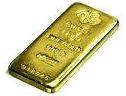
I wonder if they selling Gold as n mass or weight?
The same ounce could be as much as 6 times cheaper on the Moon, slightly more on Mars but will be quite a precious when sold on Jupiter
water 1 liter is 1 kilo.as a gauge.
Lead is heavier but softer. Diamond is harder but lighter>
Grain structure is the key to mass.One common thing...as everyone has explained = gravity !
Well dont believe me i
Im going to bed Might get a gob job tonight if she dosent catch me out for being drunk !
See this is the problem with the Internet... Too many people confusing their opinions with facts.
Green Thumbs to THEdOCTOR and Mark. Always good for a laugh
Although my colleagues must wonder why I bust out laughing all alone in my office..........
Select to expand quotetheDoctor said..
my grandma used to go to mass on sunday
No, that was mas.
Select to expand quoteMacroscien said..
I wonder if they selling Gold as n mass or weight?
The same ounce could be as much as 6 times cheaper on the Moon, slightly more on Mars but will be quite a precious when sold on Jupiter
Gravity also varies quite a bit in different places on earth, so you could arbitrage by buying in one location and selling in another. Unless they weight the gold on balance scales instead of spring, then it would not matter.
Select to expand quotedinsdale said..
Mass, a scalar quantity, is measured on a beam balance. Standardised weights on1 side and the "mass" on the other. You have weight, a vector quantity, sussed closely enough. The simple way to measure it is to suspend the "weight" on a calibrated spring with a scale next to it. In other words you're measuring the effect of gravity on that "weight". With a beam balance gravity acts equally on both sides of the beam, therefore mass is unaffected by a change in gravity.
That is a very good explanation.
Another one.
Select to expand quotecisco said..
Pink shirt...acid wash denim pants...comb-over with Chuck Norris beard & combo of pocket pen & hip pouch - that teacher's got cool written all over him!