

This article is interesting. Basically says truck industry can't run on electricity...http://theage.drive.com.au/motor-news/hydrogen-not-the-answer-ford-20120706-21ljc.html
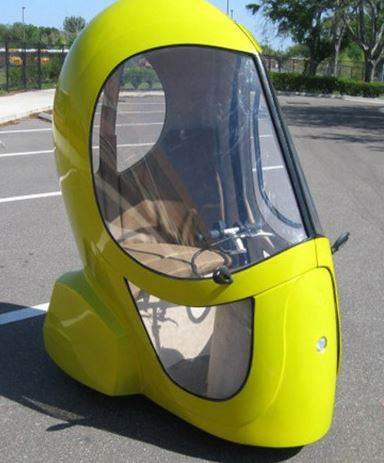
I still think we need to adjust to Micro Electric Cars, and Ultra Light Vehicles, and probably 3 star crash ratings.
In Tokyo / Yokohama, the 1st vehicle for the family is probably an Electric Assist Bicycle, the 2nd, a normal bike, and the 3rd, a pram. (Plus the ultra frequent train network).
Also it's stating the obvious, that hydrogen is about as useful a fuel as gunpowder.
The next leap might be large scale algae plants (ha ha) that convert waste plastic, oil, and captured C02 to fuel.
Already exist on a small scale, just a matter of scaling up and making the energy in vs energy out equations work.
Most trucks in Thailand for example run on LPG. Look kind of scary though with 6 big gas cylinders behind the cab.
I was thinking when I seen them if they might one day carry Hydrogen and blow up half of the country with an accident.
No problems to the Thai's though. Not a silly thing to do just destiny as per Buddha.
Apply Higgs particules to water and ask them to give the water particules the shape of fuel particules!
Easy!
It doesn't take a rocket scientist to figure out that electric vehicles have serious limitations.
The future is fossil fuels, specifically natural gas.
Unless we are allowed to build massive amounts of nuclear power plants energy will always be expensive and 100 years from now we will still be burning oil and gas for energy.

If I lived in a Metropolis CBD area, roughly 2-20km to work/home, I would get an Electric Bike. It would get you in there quicker than any other method.
Why are electric motors no good for trucks while plenty of trains use electricity, either diesel electric or fully electric? I'm not an electrical engineer so am not sure.
I agree that hydrogen is not a fuel for the future. It takes a fair bit of energy to make hydrogen and it would be difficult to store and transport the gas around.
Found an interesting article about peak oil here. This is from a bloke who was convinced it was happening.
www.theguardian.com/commentisfree/2012/jul/02/peak-oil-we-we-wrong
The idea of making fuel from bacteria is pretty interesting. However its probable hydrocarbons pumped up out of the ground will be reasonably priced for a long time to come.
Alternative fuels will struggle.
Australia has heaps of petroleum gas that can be liquified. We should run all our cars as much as possible on the stuff. LPG should be a lot cheaper too.
The future of electricity generation could be thorium molten salt nuclear reactors, probably liquid flouride thorium type.
Masses of fuel, thorium is everywhere. Safe design (beginings of a traditional meltdown stop all reactions dead), small scale (house sized), and they can process existing nuclear waste into much less harmful/shorter half-life stuff while making electricity from it.
en.wikipedia.org/wiki/Liquid_fluoride_thorium_reactor
Here is a nice vid of a cloud chamber showing the trails made by particles emitted during radioactive decay of thorium.
Bio-Diesel - made from 2nd & 3rd grade / cast aside oilseed varieties the likes of : Canola , Linseed , Rapeseed etc
We have the capacity to grow more of these varieties here in Aust to sustain something viable
There's less soap by-product from the purer stock of the above compared to waste oil from Fast Food outlets which have carbon deposits too.
Ethanol - we haven't got it as yet in WA at S/Stns & again we have the capacity to grow more cane to sustain.
Fischer Tropsch diesel has legs from my understanding of the topic. Can use coal or trees or any bio mass to create carbon free diesel, all of the carbon is captured in the manufacturing process. I am no chemist so cannot explain to great detail.
BDP: small fact for interests sake - Canola IS rapeseed oil. CANadian OiL Association decided it needed a less rapey name to sell better.
 They crush it to remove all the waste material, and what you are left with is the raw synthoil.
Not sure where I read it but I believe that there is more oil under Alaska and Nth Canada than there is in the middle east. The powers that be (ie:"they"), believe it is not yet economically viable to extract it at this point in time.
Wait for the price of oil to rise and you can see where the next environmental battle will be.
I have been riding an electric bike for years for commuting . I save around $1500 per year in fuel, I also get more excercise than when i would drive , my car spends most of its life in the shed. I used to be an evangelist and told everyone about how good they are .i have given up .most Aussies would drive to the dunny if they could . My own brother was bitchin about how his once easy commute in the NW of Sydney has now ground to a halt ,Isuggested an e bike .He said that he did not want his company paid car sitting in the garage gathering dust and also said that riding a bike was too dangerous (I asked how could it be dangerous if the traffic was crawling along at 20 km/h) Having said that i generally use side roads (except yesterday i had to use a 100 m stretch of 4 lane road ,a young woman when past in my lane leaving no room and ran me off the road ,I was making good speed too around on a light downhill stretch but she had to pass me .i had the audacity to ride up to her window and suggest that she gives bike riders more room .i was abused and tooted by other drivers who also saw me run off the road by her .)
There is thorium molten salt nuclear reactors as mentioned by Kiteboy Dave, and
"Nuclear fusion has many potential attractions. Firstly, its hydrogen isotope fuels are relatively abundant - one of the necessary isotopes, deuterium, can be extracted from seawater.
ITER (originally an acronym of International Thermonuclear Experimental Reactor) is an international nuclear fusion research and engineering project, which is currently building the world's largest and most advanced experimental tokamak nuclear fusion reactor at the Cadarache facility in the south of France."
"The project is funded and run by seven member entities ??" the European Union (EU), India, Japan, China, Russia, South Korea and the United States"
en.wikipedia.org/wiki/ITER
Neutrons generated are a problem, and may damage reactor materials!