

Hi
First time varnishing an Australian bloodwood timber slab that is my coffee table: All coats till the last few ones were fine
Read on and Please HELP!

W
ai
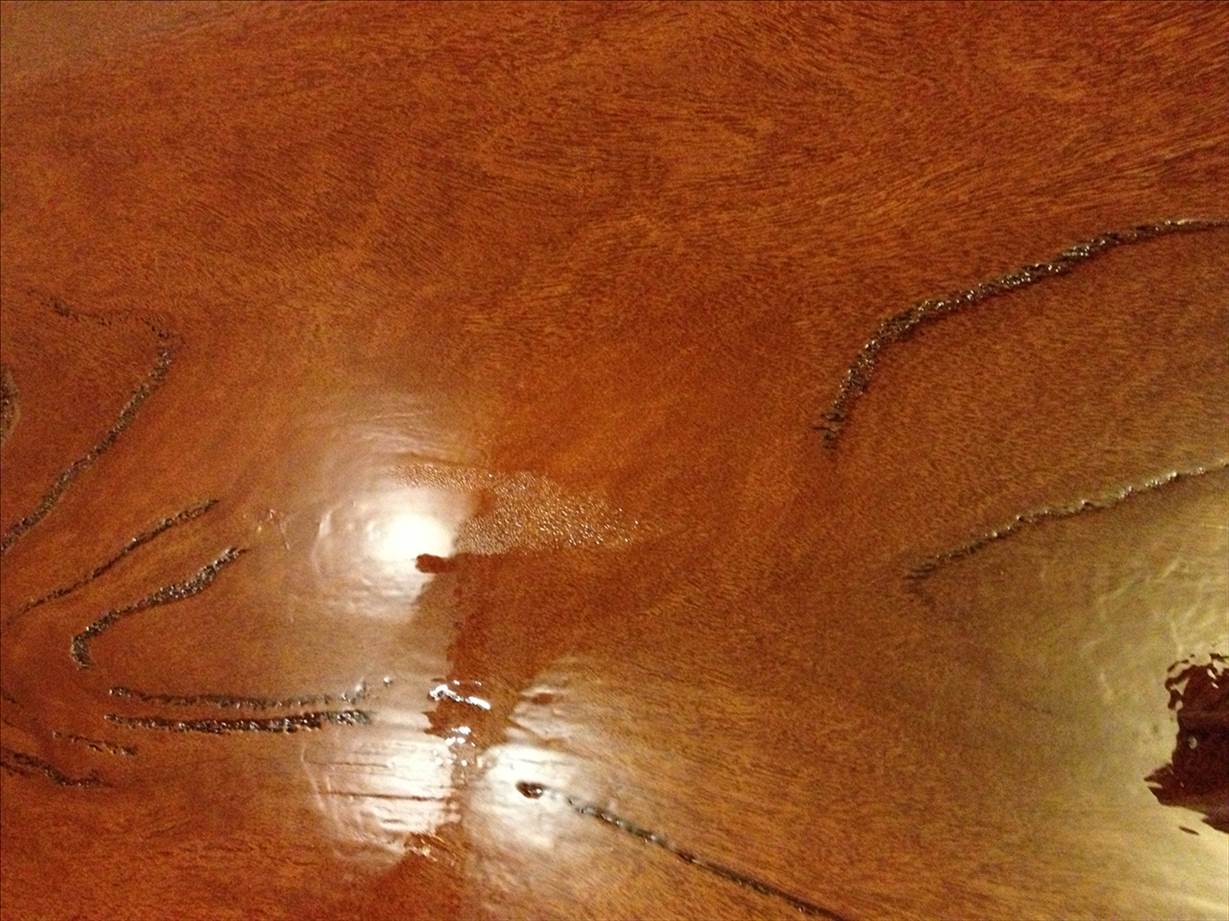
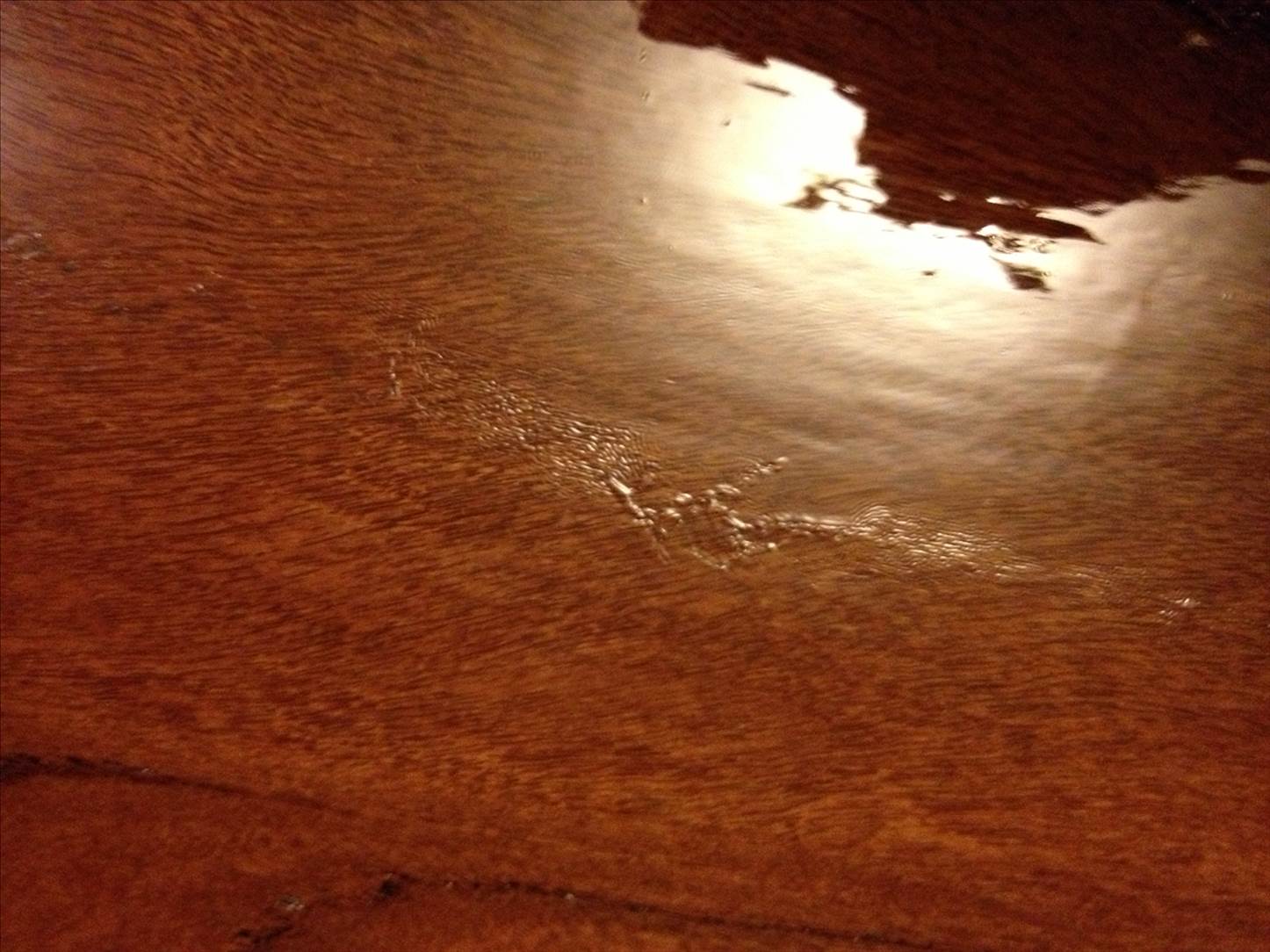
ted for 48 hours to do my 6th and my final final coat.How wrong I was about it being my last. I ran into trouble and the varnish carried streaks of hardened varnish, I dont know how that happened but it did and after I finished I noticed it, I was gutted. It could be that I did not stir the tin enough to mix the varnish or I re-used the expensive brush that I thought I had cleaned really well (I think the latter)
Day 8: 7th coat Didn't sleep well the previous night, waited for 16 hours before I had to re sand the areas with 120 grit and 220 and 320 grit trying to get those narrow hairlike thickened varnish streaks off, tough job, thankfully they got off on most areas except 2-3 spots where it was the worst. I did my best there and sanded the rest of the top as usual with 320, tack clothed the whole surface waited till dust settled and applied my seventh coat this time with my 3rd tin of varnish as you can see below the affected spots
Please help with tips as what needs to be done, it is now 36 hours since my last coat
And the 'varnish' is?
Is it thinners based, turps based, water based?
On the can what is the recoat time?
Brushed on or sprayed on?
Why 7+ coats?
The coats look heavy. Have you been thinning it enough? Leaving enough time between coats? using the same brand all the way through?
Dare say you havent mixed the varnish in the tim for long enough before applying?
I have had this sort off thing happen when not left long enough between coats. Let it dry for a few days and sand back and refinish it. If the previous coat isn't dry enough the next coat softens it and causes trouble.
The coats definitely look too thick. All varnish needs to be thinned before application. The first coats very thin so it gets into the wood. Just let it all harden off for a week or more and then sand it flat with paper and sanding block. You'll be good to go then. It's no disaster.
DASZIP & ikw777 are spot on on both accounts, the 'wrinkles' are caused by the previous coat(s) softening by the lacquer under the (thick) top coat & causing the vapours to be trapped. It can be caused by either too thick a coat, too many coats in a short period of time, or not mixing the correct hardener/accelerator, the timber not being at the ambient temperature (or moist) or a combination of many things. It's happened to me in the past (mainly when rushing or not paying attention to the correct ingredients), but the good news is - it's always salvageable.
Give it a week in a dry/warm area (not in habitable rooms or you'll asphyxiate!), rub back through a few coats with 240, 320 & 400. If it's beading on the paper, it's not cured. In future, the more coats you want to put on timber - the thinner you go.


May I ask a related question?
Despite buying a new decent brush ($20), new tin of varnish and doing my uptmost to remove all dirt and dust prior to application, I have small little pin-hole size 'bubbles' appearing on my final coat to what is otherwise a very smooth finish...
As it was a window sill behind a curtain in the kids room I left it - but was annoyed about it...
Would appreciate knowing how to avoid for next time.
Thanks !
^^^ What he said - and surprisingly, handling cardboard can leave silicone residue on your fingers. You can get drops to add to your paint/lacquer, but best to keep things simple.
As for your question Natty, I would thin it, but also make sure that it's applied thinly and perhaps a 'tack coat' to allow spread. This can be done by applying a coat, waiting until it nearly tacks, then apply a diagonal coat ensuring the brush stays wet and a good quality fine brush is best. Re; amount of coats - depends on how brutal you are with the sanding back, but probably only 2.
The issue with 'over-coating' timber is that timber will expand/contract, warp, split (even where the eye can't see it) and in most cases, the lower coats will still be expelling solvents. Thin & partially flexible (ie; good quality) lacquer will allow the timber to move slightly, the thicker the coats, the more chance of separating the lacquer from the timber. Also it's the timber that has the strength, not the lacquer, so there's no need to put too thick a coat on. The best solution is a good coat or 2 of sanding sealer, followed by a double hit of top coat.
Yes, as per what Sailshack said. Those little crinkles look like a combo of thick coats, and no enough drying time between coats.
You intervals between coats were probably OK, for 2 or 3 coats. But you probably needed to extend the re-coating intervals, at coats 4, 5, 6, & 7.
Thanks guys - I did wonder if I had introduced them from stirring to vigorously...
Advice much appreciated.
that bondall marine is really nice stuff, the best of all the stuff I have tested, but 7 coats!!!!!
from the photo it looks like it was put on too thick and maybe got a blast of heat or cold
i reckon every coat after no2 was just playing with fire.
the system I use for varnish is to use a sanding sealer, then rub back with medium steel wool, then 1 coat of varnish,med steel wool,second coat of varnish.I dont use any fine sandpapers on wood now.,even steel wool on the last sand before sealing
if you have a dust free environment and a flat surface try using a 200mm or 250mm fine nap (5 or 6mm) roller instead of a brush
i do all my doors this way, and have started doing varnished bench tops as well
^^^ You should be ok with that. Worst-case...sand back & do it again!
Just leave it a few days (week) until you tackle it.
Worst-case...sand back & do it again!
Maybe too late but I think for a nice piece of slab that will be USED and it is large, just self levelling epoxy pour-on is best. One coat, more durable etc.
So all the advice above is tops, but if doing again consider an epoxy. Of course it is mega gloss and you may not want that look.
Ive got a pine slab as a dining/kitchen table that had asealer and 2 coats of polyeurathane and its lasted 21 years. just starting to think about a sand and recoat as soon as the kids move out.
despite your 7 seven coats there is still grain and even a heavy sanding lark visible , so i would be inclined to leave it for a week and locally sand the blemish. dont forget to seal the underside to stop swelling/shrinkage