


I have a Hood 20 which is usually moored. Several years ago I checked out the rudder tube (getting a cracked rib in the process). There was pitting around the outside of the tube, probably where the waterline would be. There had been a thin fibreglass coating that had peeled away from the middle of the tube which I removed. I guess condensation formed around the tube at the waterline and the loose fibreglass held it there, causing the pitting over time.
At that time I cleaned the tube with a wire brush, photo attached, and put some Sikaflex on the tube hoping to seal it from moisture. Any ideas of what metal the tube is made of ? Also, any ideas on the best way to repair it longer term ?
Yesterday I removed the rudder, and the rudder post has only a 1 cm scratch/imperfection on it that was probably there from when built. Also, as far as I could see the rudder tube inside looks smooth. The rudder was heavier than I expected at 13 kgs or 29 pounds, is that normal ? Any ideas would be appreciated.
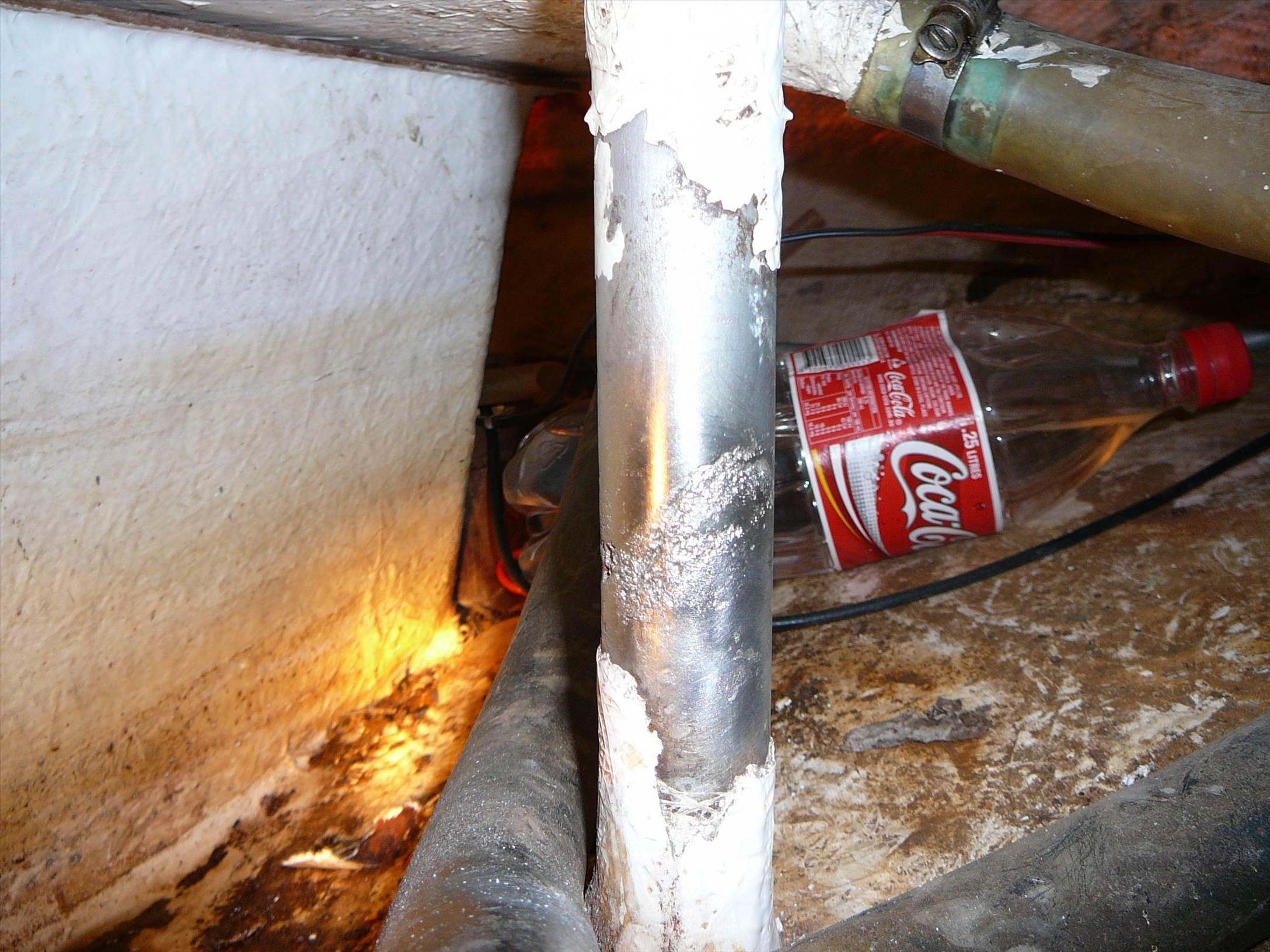
I'm no expert, but having had a similar issue I'd remove and replace. It's not a huge job to fit a new tube and the implications of failure are very serious. Having said that, my new tube developed rust and a crack and I never knew why.
We had a problem with one on my mates boat and decided to replace it before it went back into the water, I made one up out of gal water pipe from Bunnings as a temporary fix.Put it back in the water for a year . Then with the old one as a template made a replacement out of 316 stainless for the next time it went up, easy cheap and no panic.
You can buy fibreglass tubing, it's easier to glass in reliably and no future corrosion issues.
Polyflex can supply tube and bearings.
Select to expand quoteChris 249 said..
I'm no expert, but having had a similar issue I'd remove and replace. It's not a huge job to fit a new tube and the implications of failure are very serious. Having said that, my new tube developed rust and a crack and I never knew why.
Thanks Chris. Someone suggested a liquid metal filler or a metal/fibrglass filler, but I was not sure if there would be a problem with dissimilar metals. I also thought about fibreglassing over it, but it might corrode underneath again and it wouldn't be visible. Replacement would be the cleanest approach. What was the new tube you used made of ?
Select to expand quoteoldboyracer said..
We had a problem with one on my mates boat and decided to replace it before it went back into the water, I made one up out of gal water pipe from Bunnings as a temporary fix.Put it back in the water for a year . Then with the old one as a template made a replacement out of 316 stainless for the next time it went up, easy cheap and no panic.
Thanks oldboyracer. Again it sounds like a good solution compared to patchups. Not looking forward to working in the cramped stern of the Hood 20, I'll try to protect my ribs better this time 
Select to expand quotePhoenixStar said..
You can buy fibreglass tubing, it's easier to glass in reliably and no future corrosion issues.
Polyflex can supply tube and bearings.
Thanks PhoenixStar. Had a quick look at the Polyflex website. Sounds like fibreglass tubing would have some advantages over metal.
I would sand the whole tube smooth and blend in the remaining fibreglass top and bottom. Then using fibreglass tape and epoxy resin do a layup over the whole unit. Check it again in twenty years.
Select to expand quoteRamona said..
I would sand the whole tube smooth and blend in the remaining fibreglass top and bottom. Then using fibreglass tape and epoxy resin do a layup over the whole unit. Check it again in twenty years.
I'm with you Ramona. I was just about to write the same thing. Saves a lot of alignment problems and work on deck and under the boat if you replace the tube. If it is glassed correctly, the glass will form the new tube and it does not matter if the old tube fails in the future.
Select to expand quoteRamona said..
I would sand the whole tube smooth and blend in the remaining fibreglass top and bottom. Then using fibreglass tape and epoxy resin do a layup over the whole unit. Check it again in twenty years.
Thanks Ramona. Sounds like a good plan except I'm sure I won't be around to check it in twenty years I guess the thin layer of resin on the tube came off because they didn't clean/prepare the middle of the tube properly.
Select to expand quoteJode5 said..Ramona said..
I would sand the whole tube smooth and blend in the remaining fibreglass top and bottom. Then using fibreglass tape and epoxy resin do a layup over the whole unit. Check it again in twenty years.
I'm with you Ramona. I was just about to write the same thing. Saves a lot of alignment problems and work on deck and under the boat if you replace the tube. If it is glassed correctly, the glass will form the new tube and it does not matter if the old tube fails in the future.
Thanks Jode5. It would definitely save on complications and if made into one complete tube as you and Ramona suggest it wouldn't even matter if it adhered properly to the metal tube in the middle or not. A good solution.
On the matter of the rudder, do you know if 13 Kgs sounds normal ? I have never had the rudder off before and was surprised how heavy it was. Hopefully it was just soldly built and hasn't absorbed water, although there is no sign of seepage anywhere.
Select to expand quoteHood20 said..Jode5 said..Ramona said..
I would sand the whole tube smooth and blend in the remaining fibreglass top and bottom. Then using fibreglass tape and epoxy resin do a layup over the whole unit. Check it again in twenty years.
I'm with you Ramona. I was just about to write the same thing. Saves a lot of alignment problems and work on deck and under the boat if you replace the tube. If it is glassed correctly, the glass will form the new tube and it does not matter if the old tube fails in the future.
Thanks Jode5. It would definitely save on complications and if made into one complete tube as you and Ramona suggest it wouldn't even matter if it adhered properly to the metal tube in the middle or not. A good solution.
On the matter of the rudder, do you know if 13 Kgs sounds normal ? I have never had the rudder off before and was surprised how heavy it was. Hopefully it was just soldly built and hasn't absorbed water, although there is no sign of seepage anywhere.
13 kg sounds normal. By the time you add the weight of the shaft complete with the internal framework and the rudder it would not be hard to get 13kg. I could barely lift the rudders on my Catalina 445 and Young 11. I dread the weight of my Hanse 575 rudder even though it has an aluminium shaft.
Select to expand quoteJode5 said..Hood20 said..Jode5 said..Ramona said..
I would sand the whole tube smooth and blend in the remaining fibreglass top and bottom. Then using fibreglass tape and epoxy resin do a layup over the whole unit. Check it again in twenty years.
I'm with you Ramona. I was just about to write the same thing. Saves a lot of alignment problems and work on deck and under the boat if you replace the tube. If it is glassed correctly, the glass will form the new tube and it does not matter if the old tube fails in the future.
Thanks Jode5. It would definitely save on complications and if made into one complete tube as you and Ramona suggest it wouldn't even matter if it adhered properly to the metal tube in the middle or not. A good solution.
On the matter of the rudder, do you know if 13 Kgs sounds normal ? I have never had the rudder off before and was surprised how heavy it was. Hopefully it was just soldly built and hasn't absorbed water, although there is no sign of seepage anywhere.
13 kg sounds normal. By the time you add the weight of the shaft complete with the internal framework and the rudder it would not be hard to get 13kg. I could barely lift the rudders on my Catalina 445 and Young 11. I dread the weight of my Hanse 575 rudder even though it has an aluminium shaft.
Thanks Jode5, good to know that the weight is usual. A Hanse 575 is a big boat so that rudder would be difficult to handle, hopefully it will never be necessary.
Thanks to everyone for your comments, it's much appreciated.
Select to expand quoteHood20 said..Ramona said..
I would sand the whole tube smooth and blend in the remaining fibreglass top and bottom. Then using fibreglass tape and epoxy resin do a layup over the whole unit. Check it again in twenty years.
Thanks Ramona. Sounds like a good plan except I'm sure I won't be around to check it in twenty years I guess the thin layer of resin on the tube came off because they didn't clean/prepare the middle of the tube properly.
Fibreglass resin does not stick to wood or metal all that well. Over the years the changes in temperature would have caused the separation between the fibreglass and the metal tube and moisture has caused the pitting. The tube is there basically to keep the water out. All the wear if any will be at each end of the tube. Front of the tube at the top and rear at the bottom.
They are alloy tubes used in the rudder shaft housing you can patch the corrosion with a builders bog but look into the problem of isolation of the stainless shaft with denso tape or poly butyl tape, to stop the galvanic corrosion evident.
It's hard to love an alloy tube with a stainless rudder shaft. It's not rocket science to replace the tube with a fibreglass one and keep the alignment right. Cut the tube flush with the cockpit floor and hull, plug it with wood and use a hole saw to clear the mess. Grind a clean surface and epoxy the new tube in. Voila!
Select to expand quotewhiteout said..
They are alloy tubes used in the rudder shaft housing you can patch the corrosion with a builders bog but look into the problem of isolation of the stainless shaft with denso tape or poly butyl tape, to stop the galvanic corrosion evident.
Thanks whiteout. There is thick fibreglass at each end of the rudder tube, but in the middle it was just a bit of thin resin (little more than eggshell thickness) that had started to peel away from the tube. I broke the thin layer off and the pitting was there and seemed to follow the shape of the peeling fibreglass. There is no other pitting on the rudder tube, even on the inside of the tube. I guessed the pitting on the outside of the rudder tube was caused by moisture/salt captured there for years by the peeling fibreglass. Wouldn't galvanic corrosion be on the inside of the rudder tube ?
Select to expand quotePhoenixStar said..
It's hard to love an alloy tube with a stainless rudder shaft. It's not rocket science to replace the tube with a fibreglass one and keep the alignment right. Cut the tube flush with the cockpit floor and hull, plug it with wood and use a hole saw to clear the mess. Grind a clean surface and epoxy the new tube in. Voila!
Thanks PhoenixStar. Is the (round) wood plug to help align the hole saw and later the new rudder tube ?
Select to expand quoteHood20 said..PhoenixStar said..
It's hard to love an alloy tube with a stainless rudder shaft. It's not rocket science to replace the tube with a fibreglass one and keep the alignment right. Cut the tube flush with the cockpit floor and hull, plug it with wood and use a hole saw to clear the mess. Grind a clean surface and epoxy the new tube in. Voila!
Thanks PhoenixStar. Is the (round) wood plug to help align the hole saw and later the new rudder tube ?
Yes, that's the idea. If you can find a deep style hole saw that's a big help. We could get them in Maryborough a few years ago but I don't know the present situation. We used a similar technique to bore the stern tubes on a cat.