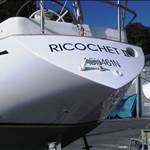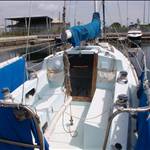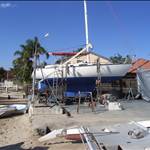


I live in Craigieburn and have a Hartley 21ft that needs some serious re wiring.
I was googling for wire and come across the Seebreeze forum. I thought I may ask some questions here.
Is it important to have 'tinned' copper wire for everything? 
I want to put some cabin lights in and saw LED lighting. Is this the best way to go, or are fluro lights okay?
The fuses are a bit of a rats nest. Is there a good marine style fuse box anyone can recommend?
Google showed a shop call All About 12 Volt in Somerton. Has anyone had any experience there?
Thanks for any information.
Regards Whitecap.
Not an electrician Whitecap but you will get heaps of good advice here www.trailersailerplace.com.au/ by searching and asking.
Cheers
Ken
I only use tinned wire and Led bars. Jaycar has wires / switches / lugs . Led bars /just bought 30/ paid $3- eBay, 24cm long- 24 led. Put them in small allu. channel or just clear silicon, love them draw 80mA, if you put 3 in line its daylight and less than 1/4 A. Because of tiny current I use 1 fuse for all internal lights.
Before you start make a rough estimate what you must have /nav. light, anchor light, steaming light-when you motoring after sun set./.
Now what you wont to have - internal lights, marine radio and UHF, FM radio, compass light, cigarette socket, manual switch for bilge pump.
Just a basic stuff, later you can add 40W sollar and cut off , 240 invertor to charge mobil and camera and something along those lines.
Many years ago I bought a "Careel 18" the wiring was in a shocking state, I re-wired it with twin flex type cable (untined) and it seem to have worked well.
BUT you must sweat solder into EVERY connection before you screw the cable ends to ANY device. The reason is that copper corrodes (and the new wire has done it also) but the lead / tin solder doesn't easily corrode so the connections will remain good for many many years.
DO NOT use push on terminals as they will corrode and fail..... solder, solder, solder.
NEVER use those wire splice joiners as they have aluminium as the joiner, when it is used in a moist salty humid boat cabin you might be lucky a year or two before they fail.
Your main switchboard area, solder to the back of each switch, fuse etc. and bring a small loom of ALL the connections not just the ones you think you are going use (future proof it) bring them out to a 10-12 way tag terminal block/s that way it will be easier to add or work on the cabling easily.
Try and create a loom (like in a car) rather than lots of wires going off in a spiders web, there are so many things available to use like spiral plastic tube etc available from auto electrical stores.
LED lighting these days are excellent and would be ideal for boats.
But the key thing is solder, solder, solder.
12v-240v inverters are very inefficent, (why take 12vDC up to 240v AC then back to 12v DC), only use them when you have to.
Phone chargers, laptops, TV's etc can all be run from 12v DC
Thanks a lot you guys.
I have just spent a hot weekend upside down and in all sorts of positions tracing where all my wires go. I have a handle on it now.
I ended up buying all tinned wire in a couple of different sizes. The store I mentioned earlier, All About 12 Volt, also had a huge range of 'Blue Sea' electrical marine components from the USA. Very good quality. I brought some weather proof circuit breaker panels, bus bars and a dual battery system.
I would recommend the above store and parts to anyone else.
I now have to get back in and install everything. I'd rather be catching the seabreeze this Australia Day.
Regards Whitecap.
I think the answer is it depends how long you want to keep the boat.
Im an electronics engineer and all my boat re-wiring has been with tinned copper wire since I want my boat (Martzcraft 35) to be in good shape in 10 years time, and its in a saltwater environment.
To keep the boat going a short time un-tinned wire will work, but after a certain time the internal copper wire will oxidize black on the outside and sooner or later all the way through. Then it might not work right when you want to start the engine due to those looming rocks.
Two years ago I bought a "reconditioned" 20 year old Volvo Penta engine and when I checked the wiring harnesses some of the wires fell out of the cable crimps as the "wire" was actually black oxide held in place by the plastic insulation!