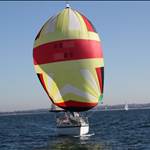


My outboard has leads running through the cockpit lockers to my battery terminals. Today been out whale watching 4.miles out been motoring most the time and the battery has.gone from 12.5 to 14 on the amp meter. Had the fridge running briefly but its cold as anyway. Can i stuff the battery by having it constantly charging?
Hi Steve. Sounds like you have been having fun. Yes, you can stuff a battery by overcharging. Trek covered this well in my thread from a week or so back
www.seabreeze.com.au/forums/Sailing/General/Small-Solar-controllers/
Oh BTW you were reading Volts, not amps.
Select to expand quoteSectorsteve said..
My outboard has leads running through the cockpit lockers to my battery terminals. Today been out whale watching 4.miles out been motoring most the time and the battery has.gone from 12.5 to 14 on the amp meter. Had the fridge running briefly but its cold as anyway. Can i stuff the battery by having it constantly charging?
Sounds pretty good to me. Cars run all day with alternators providing 13.8 to 14.5 vlt to the battery.
Thanks guys. Ill need to sort out this charging etc. Saw no whalesuntil deciding to head in. Saw a big tail breach surface then 2 whales breaching and being nutcases for a bit. Awesome!
Excellent day out Steve.
Regarding your charging. Yes, you can overcharge and kill a battery. However, a normal car or bike alternator will charge at roughly 13.8 volts at any speed above idle. The outboard you have will have a built in voltage regulator, this regulator gets the voltage load back from the charge cables and regulates how much charge the alternator sends back to the battery. At least, that's the layman's explanation.
If your regulator wasn't working, your voltmeter would show a much higher voltage than 14, which is still fine.
Select to expand quoteSectorsteve said...
Thanks guys. Ill need to sort out this charging etc. Saw no whalesuntil deciding to head in. Saw a big tail breach surface then 2 whales breaching and being nutcases for a bit. Awesome!
On Saturday we went from botany bay to Jibbon saw 10 whales in 4 different pods
Select to expand quotetwodogs1969 said...Sectorsteve said...
Thanks guys. Ill need to sort out this charging etc. Saw no whalesuntil deciding to head in. Saw a big tail breach surface then 2 whales breaching and being nutcases for a bit. Awesome!
On Saturday we went from botany bay to Jibbon saw 10 whales in 4 different pods
Saturday would have been gorgeous. Weathers gonna turn tomorrow be sure to check those moorings!
Select to expand quoteMichaelR said...
Excellent day out Steve.
Regarding your charging. Yes, you can overcharge and kill a battery. However, a normal car or bike alternator will charge at roughly 13.8 volts at any speed above idle. The outboard you have will have a built in voltage regulator, this regulator gets the voltage load back from the charge cables and regulates how much charge the alternator sends back to the battery. At least, that's the layman's explanation.
If your regulator wasn't working, your voltmeter would show a much higher voltage than 14, which is still fine.
Thanks michael. So are you saying that theres a kind of safety system in there somewhere? What about from the panel? Im all paranoid now since frying the last battery (left inverter on) so im disconnecting the solar panel when i leave the boat.
It is not really the right question is it?
It is the rate of charge and voltage not the amount of charge as full charge is full charge although this changes over time.
Unfortunately most regulators are rubbish and you get what you pay for and this is usually the problem.
we talking about excessive bat. charge or discharge ?
Sure leaving bat. loaded / invertor, bilge pump, ligh or any load /
without maintaning adeqate charge meantime ....it will kill the battery.
opsite running any engine even outboard never harm the bat.
the same solar with controller.
fully charge bat. happy battery.
why disconnect solar....there is no controller in the line.
Also what type of battery?
For instance in a race boat years ago I had a set of German made Gels used in stunt planes and 13.8 volts was enough to fry them when charging.
Further the new regulator when put on the Gel setting was still too high for that particular brand of battery.
Result was two lesser quality but more forgiving AGM.
The question is really does the outboard alternator have a charge regulator. I checked the spec sheets for my new 6hp Tohatsu and it doesnt say. Probably, if it is a larger motor it would have one, but the little ones guess you would have to ask the manufacurer or find a workshop manual.
If you measure the output voltage across the battery and the 14vlt is constant through out the rev range of the motor, there would be a pretty good chance that there is a reg. You could also put a load on the battery with a spot light, whilst charging and the voltage should remain aprox 14vlt, unless of course your load or spot light draws more current than what the outboard charging system can provide.
When the fridge was running it was 12.5. But after motoring a while i switched fridge off and the battery showed 14 VOLTS. its just a 40ah century deep cycle
Select to expand quoteSectorsteve said..
When the fridge was running it was 12.5. But after motoring a while i switched fridge off and the battery showed 14 VOLTS. its just a 40ah century deep cycle
That would seem to indicate to me that the fridge draws more current or close to what your outboard charging system can provide.