

Im thinking of getting a Jp nose protector.I dont catapult very often but figure it only takes one to stuff up my board. Anyone use them & do they work? Someone in a topic said they just hide the damage..?
 ). Sheet in and hold on and you will spin around past the nose and land on your back on the water most of the time.
Thats the topic I was talking about..I read about the Jez's knob or similar & the review said it could damage the mast track ( or at least earlier ones ) + they only deflect it from the nose so it stills hits the rail.I know you can make protectors from the cylinders of swimming pool foam but you glue them on & im not sure if you could clean the glue off if you removed it .Also this is the first time Ive ever had a lovely spick & span new board & I want to revel in the look!

I'm a big fan of JP nose protectors (after I split the nose of my 1 day old X-cite ride  ). They take a lot of punishment by spreading the load with adding too much weight. This is helped by the fact that the are fitted by a layer of silicone filler which acts as a shock adsorber. If you have a major wipe out then you can always remove the nose protector and see if you have cracked the nose, the damage will be very minor compared to not have one fitted. All the JP boards at hire places such as Dahab in Egypt use them and not the gey sponge pads ( which I think look pants ).
I found Jez's knob didn't protect the nose at all as its not long enough to stop the mast hitting the nose. Also Jez's knob get in the way if your in the water and you want to move the board around to waterstart.
). They take a lot of punishment by spreading the load with adding too much weight. This is helped by the fact that the are fitted by a layer of silicone filler which acts as a shock adsorber. If you have a major wipe out then you can always remove the nose protector and see if you have cracked the nose, the damage will be very minor compared to not have one fitted. All the JP boards at hire places such as Dahab in Egypt use them and not the gey sponge pads ( which I think look pants ).
Well Ive decided to get one but the usual problem..not in stock etc..I hope I B dont stuff the board before I get one!

Assuming the worst happens & the nose gets crunched how much roughly for a professional repair & can you tell its been repaired?
Just a quick question.
When you are in the water, swim around and see how far above the nose the boom is. On a board like a rocket which is less then 250 long it's not often that the boom would be low enough to hit the nose. also you will find the mast hits the rail where the pads are and not directly on the fiberglass.
Not sure for you particuler setup small sail 5.6 for the size of board and short boom, low boom hight.
In my years have done more damage with harness hooks then booms.
regards
David
jp do a soft and a hard nose protector. which one are you refering too.
what board is it going on??
You buy a board to SAIL so sail it.
It's all about freedom and enjoyment.
NOT to agonise and worry about it, wrap it all in daggy plastic thingos, knobs deflectors etc etc 
I mean you wouldn't wrap your car up to avoid a ding
You're an experienced sailor, but the odd ding happens to all of us
Buy some epoxy glass mat and Q cell $50 will set you up for life
Chek out the Board Lady site (or Mark Aust will tell U anyway)
And with your artistic flair I'd say you'd get a far better finish than most
) It survived another day! & I finally got it on the plane !Will give a run down tomorrow..too many aches & pains tonight..Im getting too old for this! Esp bigger sails...

I made some nose protectors out of fiberglass. Layed up csm and woven roving thin on the bottom thick,4mm, on the top.They seem to work as i haven't damaged anything since. Stuck them on with small dobs of silicone.
Once I started I just kept going from a CA40 to formula.
They spread impact loads over a wide area and would probably increase the chance of mast breakage but hey damage on a new board is soul destroying.
Would buy them though if I could but we use *board.
I saw some at Windsurfing Perth last week but dont know what sizes they were.
Try emailing Reg to see.
Can post photos if reqd.
I've got a JP nose protector hanging in the shed...dinged my first board pretty bad, patched it & fitted the protector. Unfortunately didn't patch it good enough, and it let water in, so removed the protector and fixed it properly. I found that I didn't ding the nose anymore (less catapults), so I left it off.
One prob with the protector, although it will protect the board, it's hard, and hard impact with the mast will result in a damaged mast, I know...went through 3 masts before I realised that they all went exactly at the same point...the distance from the base to the nose of the board.
My 2 cents...either get a soft nose protector, or a protector sleeve for the mast. Btw, cleaning silicone off the rough surface of the board wasn't much fun.
 but.. the more the merrier!Thanks! Now I wont have to worry about wrecking the board if I get adventurous.. just the body..
As a newb who does catapult a bit, over the last year or so I have found.
The Deviator thingy (a bit like the knob) loaded the mast extension to the point where it is cracked inside and is now a spare because it won't lock onto the euro pin anymore. It also gets in the way when water starting and swinging the sail past the nose of the board.
Nose damage on my Xantos 152 - I've repaired it myself, as per board lady, it's not a pro job but keeps the water out. I didn't rip the entire nose off just heavily bruised the nose area and created cracks. Now I've got it down pat with the materials etc it take around 1 hour to sand back and prep then apply the fibreglass etc. Wait about a day then sand back and paint. Next day ready to go again. Lately I haven't been sanding and painting. so I take out a day, but I've got this weekend off the water so I might tidy it up a bit.
deviator
www.thedeviator.com/
board lady
www.boardlady.com/

No good .. doesnt stop whiplash.. actually I hate to think how bad whiplash would be if you catapulted with that..still I suppose that would be the least of your troubles as you drowned..
B..hell..I think I better order 3 nose protectors + soft pool noodles for the front to protect it when that hits it!
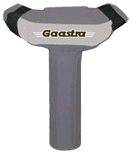
I just received the protector.For some reason I expected a hard fibreglass shell with soft filling but it is 3 layers. A hard plastic top / a high density EVA ( whatever that is ) / then the bottom is low density EVA. They say to glue it on with contact adhesive but i want to be able to remove it easily at a later date so Im not sure what to use..?
So its the same type..soft & grey? I was looking at a few silicones in the hardware shop .One said dont get wet & the other didnt say if it was Ok in water.
They used a clear type, didnt say exactly which one used. I do know it is one used for sealing in wet area's if thats any help too you.
Mineral
Hi, SBC,
Suggest you try Selly's "All Clear", which, for general repairs, will set even in water (but on your board, read the instructions on the tube, apply the protectors, then WAIT for the silicone to set correctly).
Hope this helps.
I reckon it would make a good horse collar
beats putting gunky stuff all over your new board