


So I've just put a new head on this old fin (tuttle -> power box). The whole project has gone well but I didn't think about getting the air bubbles out of my glue mix when I glued the fin into the new head (conversion kit).
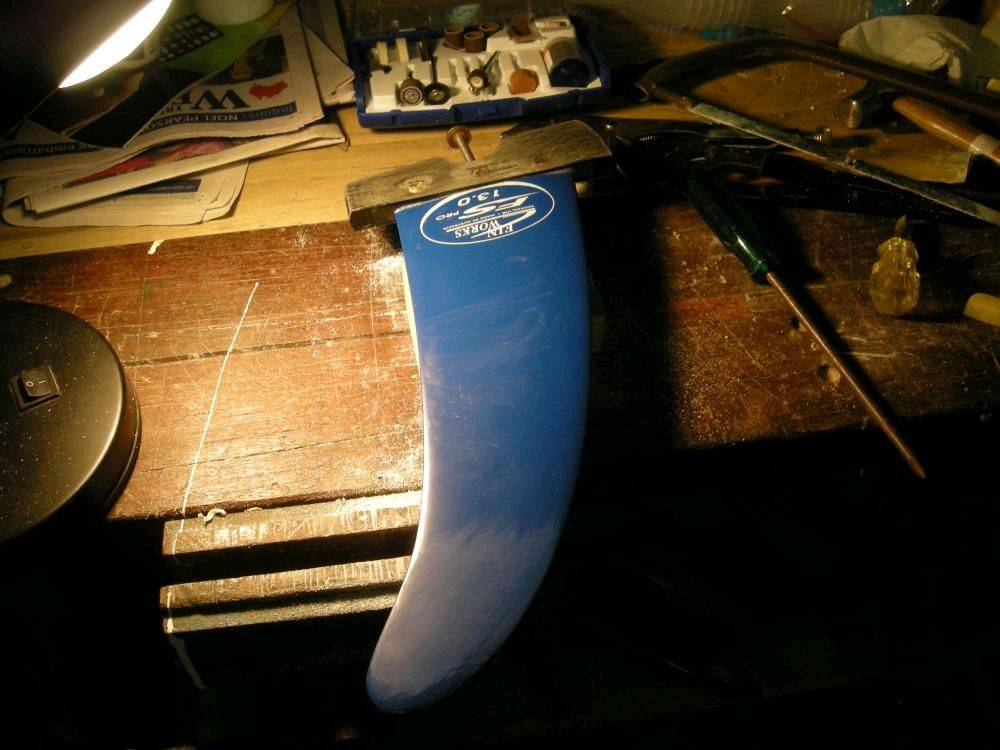
Now that I think about it I'm concerned that the air bubbles are a weak point. The mix is International epoxy resin with some microfibres to thicken it out - but still a pretty runny brew as I bolted the fin together first and then poured in the resin.
I had plenty left over which I left to set in ziplock bag. I've cut out a section and wet sanded it in the hope of getting an idea of the integrity of the final cured glue. Here it is:
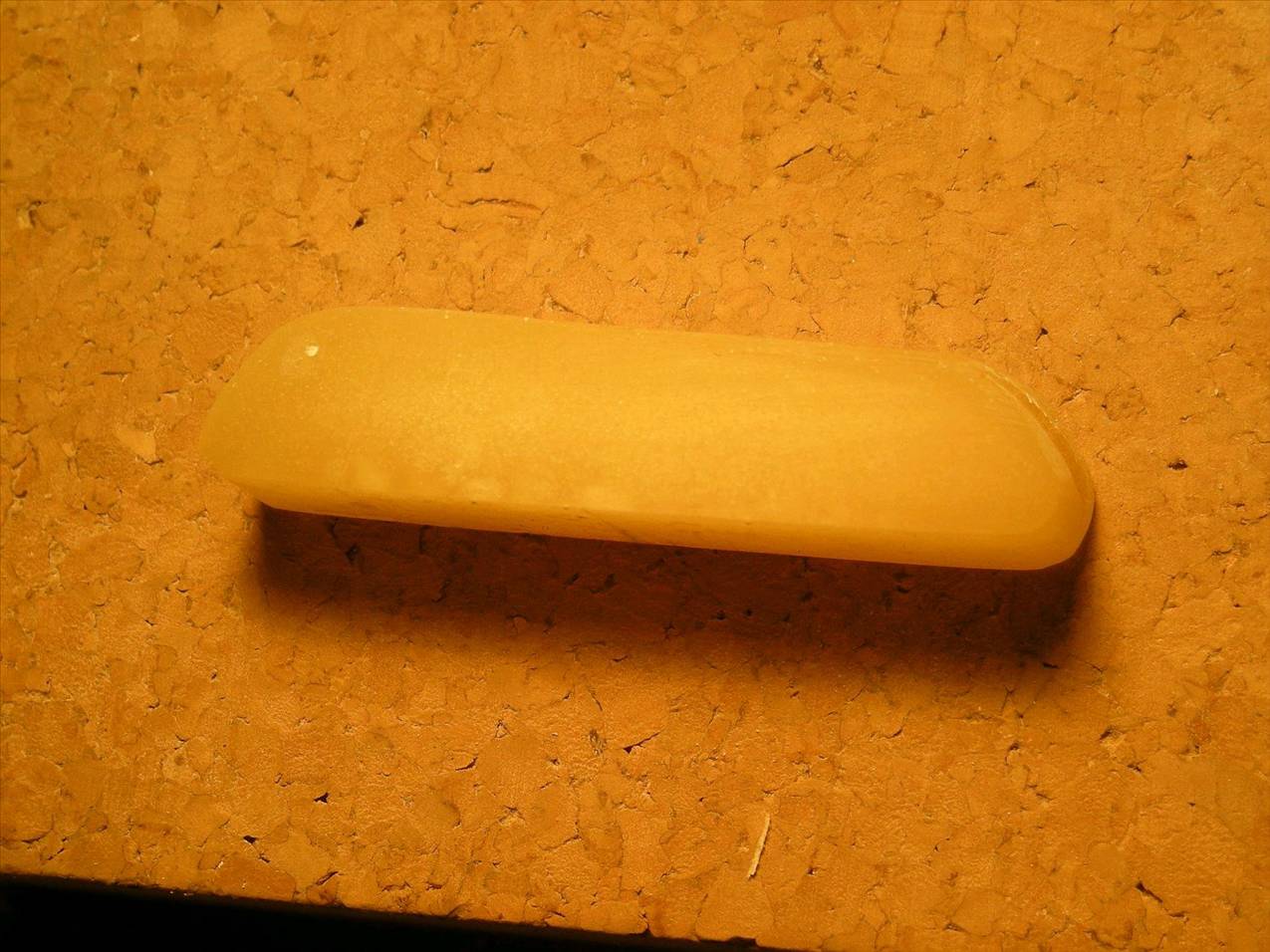
I was hoping some one could give an opinion? The conversion kit included two through bolts (which I fitted) so maybe I'm worrying about nothing?
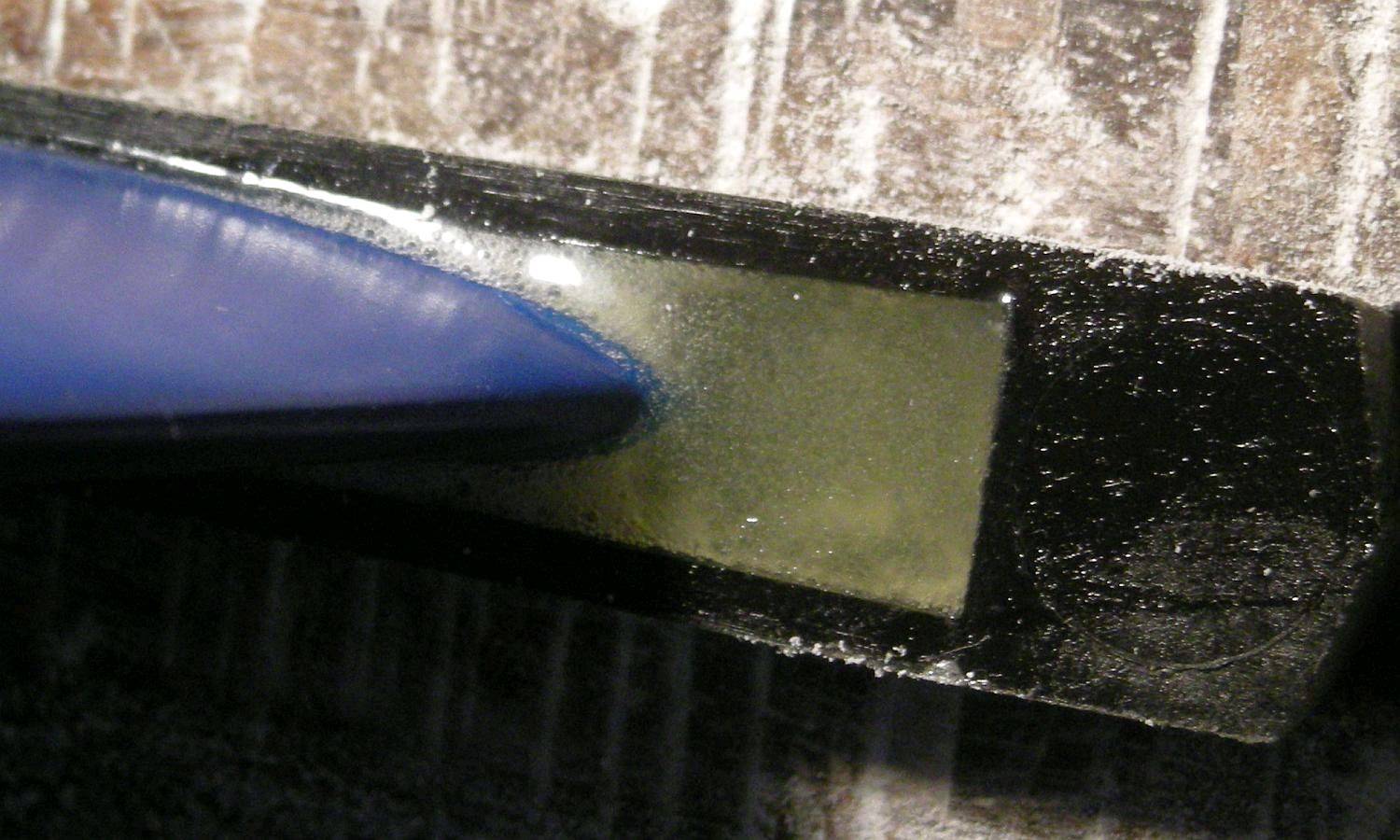
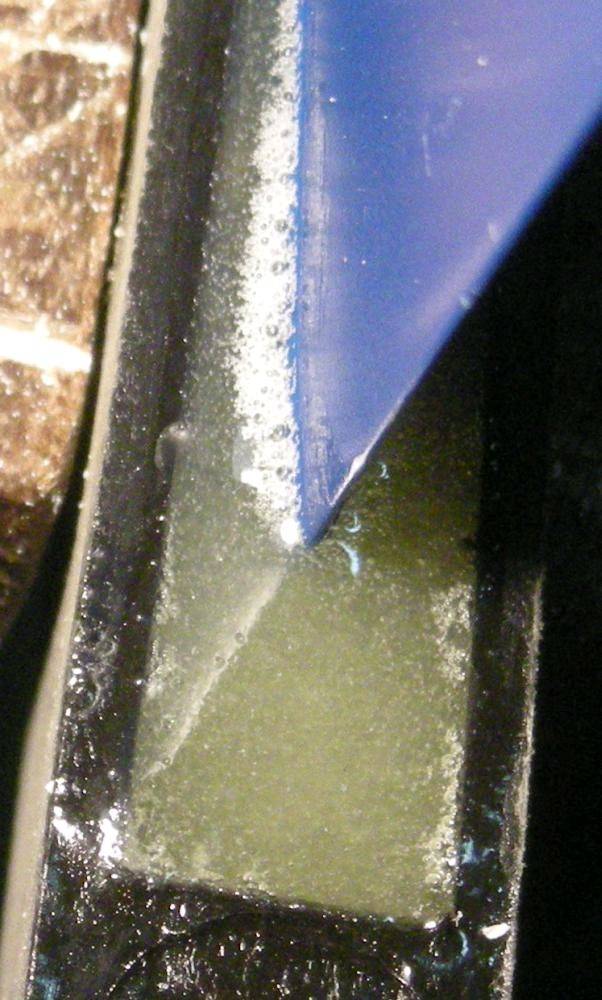
Some more pics showing bubbles that rose to the surface:
Should be fine. To toughen the resin no matter what type /quality epoxy it is, it will benefit from a post cure. Let it cure at room temp for at least 24 hours then give it 30deg for a couple of hours, then ramp it to 40 deg for an hour, then 50 deg for 5 hours or so. This will toughen the resin far beyond what a normal room tempeature cure can acheive. To go to extreme, some resins will cure to a brittle state at room temp only (called b-staging) and not acquire any strength/toughness at all until they have been post cured. As with any epoxy you MUST ensure accurate mix ratio, not yeah that looks about 4 to 1 or whatever the ratio may be.
if you want you can put the resin under vacuum in a vacuum chamber to remove the bubbles. The volume of the resin will increase substantially so make sure your vac pot is big or the tin inside the vac pot is quite large.
alternatively you can pour the contents of the mixed resin from one tin to another from a great hight while forming a very thin ribbon.
both will work. vacuum is better, but you need a pump.
My mix was definitely 4:1, but I had no way of putting together a vacuum chamber. I like the pouring idea I'll try that next time.
Is it better to get the bubbles out before or after adding in the microfibres?
if u heat the resin with hair dryer for a very short time it will change the viscosity of the reisin( make is runnier) this will help to take out more bubbles but ... u shouldnt have anny problem with the bubbles now
Hey ikw777 you mention a "conversion kit"
Is there actually one available, if so where???????????
I bought it about five years ago from Caloundra City Sailboards. Has a plastic head, 2 x brass through bolts (countersunk heads on either end) and the brass insert for the fin bolt.
You have to cut or grind down the head of your fin to form a tang that fits inside the new plastic head. The you drill for the bolts, bolt it up and pour in the glue (at least that's how I did it)
As I recall the kit cost me $15. Don't know whether Alan has any more.
It's not a complex project but I did take a lot of time over measurements and filing/grinding the fin to fit in the new head. Mine ended up skewed 0.5 mm off centre but I think it will be fine.
You're probably putting the bubbles in yourself when you mix your resin.
use a flat stick or spatula to mix your resin and stir slowly don't whisk it up
Should help
The conversion kit is a "Select conversion kit"
It is ok for G10 or laminated glass fins, use the screws to go through the fins as the epoxy does not stick well to the plastic.
Be extremely cautious if you are using a laminate over core fin (such as a carbon fin) if you have to reduce the thickness of the fin to put it into the box then you will GREATLY reduce the strength of the fin giving it a high likelihood of shearing at the base.