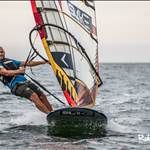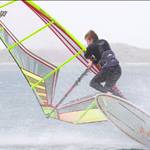


who has few useful tips to reduce some of the "walks of shame"....?
not a beginner any more, and i start to think that now it's not only my average technique - but also the equipment that is "helping" me to walk from time to time....
Here's a tip to avoid the walk of shame…
When you first get out on the water, if you're going ok, try and work your way up wind a fair bit. Then try and sail back and forth from your new upwind position.
This gives you a margin for error later on, if the wind picks up and you can't handle it (get blown down wind while you're in the drink etc, or if it drops off and you have to slog back in)
Don't forget though, the walk of shame is part of building character
(so I'm told)
Practice your tacks.
Use gusts to get upwind but make sure to keep board speed.
Have a read of this www.guycribb.com/userfiles/documents/cranking%20upwind.pdf
Don't sail in rivers or off beaches where the wind and current are going in the same direction.
Buy a formula board [}:)]
 so no record of the speed runs
don't look at it as a walk of shame, you should look at it as a walk of discovery
Where are you sailing, ocean with waves/swell or in totally flat water?
What wind strengths?
What gear are you using?
In straps and/or harness?
Hard to narrow down any advice with you describing your technique as 'average'... that puts you above most of the people who are probably going to give you any 'tips' on here!
 sorry disregard
TonyMurray - good point - answers below -
Where are you sailing, ocean with waves/swell or in totally flat water?
<Port Phillip bay>
What wind strengths?
<25+ Knts>
What gear are you using?
<130L board, Sail - 5, Fin - 44 >
In straps and/or harness?
<yes x 2>

Walk of shame sucks, but happens to us all. Generally it is an indication of being under powered for the conditions. Developing a good technique for sailing upwind can save you 9 out of 10 times though....the wave sailing guys are experts at this....
.+ don't sail somewhere that could turn offshore later in the day..check the forecast.
I'm don't have any big gear, so your setup is a bit out of my area of expertise. But a 5.0 on a 130 litre board sounds like you're pushing the boundaries a bit. If the sail is too small for the board it can have a tendency to steer the board downwind (this is common for people trying to teach their kids with small sails on bigger boards).
A great way to make up ground is to use the swell or waves (even small stuff) when coming back in towards shore. Once you feel the board pick up the ride of the swell you can get the board pointed a lot higher than you normally could. It sometimes helps to come out of the straps and stand more forward on the board to do this.
Some good advice from some of the others on here.
Look for others out in the water who are making ground up wind and see if you can find things they seem to be doing different than you... foot position, sail position, body position etc, etc, etc
Have fun. I've been at it for 30 years and still learning... and love it!

Think like a freestyler...
Weight forward, putting your weight through the third leg (your mast foot, not the other one).
In average or underpowered conditions, front leg a little bent, knee facing forward.
These two actions will get the windward rail into the water a little which does two things
a) points you upwind
b) provides more resistance to the water to prevent you from being pushed sideways (like the keel on a yacht)
Most important of all though... LOOK.
With virtually everything in windsurfing from gybes to vulcans (there are a couple of exceptions) your head determines where you will go.
If you are looking slightly upwind, your body will fall into the right shape to sail upwind.
Advanced tip: If actually underpowered, and trying to get upwind on a decent size board (100l +) take your back foot out of the strap. Controversial, but it works. If it feels like you're nearly catapulting, you're doing it right. This takes the weight off the back of the board and helps keep you planing.