
Record Humpbacks: East Coast Season Peaks

In short
Australia's east coast humpback population has reached a record 40,000 animals, with June marking the start of the northbound migration past every major fishing and boating port from Sydney to the Whitsundays.
A new study confirmed a whale traveled 15,100 kilometres between Brazil and Hervey Bay over 22 years - the longest individual humpback movement ever documented - showing just how far these animals range across a single lifetime.
What to watch
Encounter frequency peaks July through August; know your exclusion zones before you leave the ramp this winter.
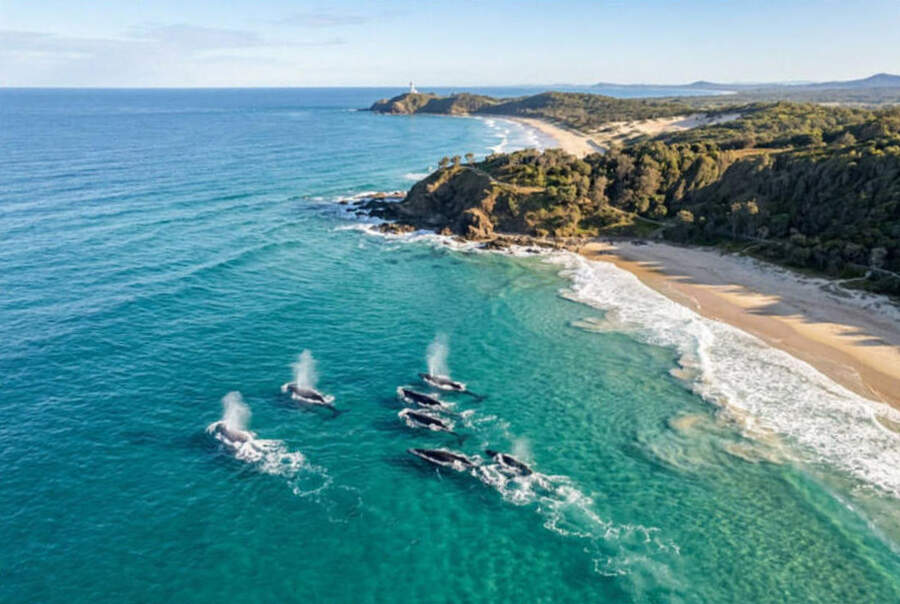
June is the start of it.
From now until late September, roughly 40,000 humpback whales are pushing north along Australia's east coast, moving from Antarctic feeding grounds toward breeding areas in warmer Queensland and Coral Sea waters.
The population has recovered from near-extinction. In the 1960s, commercial whaling reduced the east coast humpback stock to fewer than 1,000 animals. Numbers have climbed at around 10% per year since protection began, and ORRCA's 2025 Whale Census Day returned more than 5,000 confirmed sightings from a single line of headlands between Sydney and Wollongong - a new record for the annual count.
The 2026 Census is scheduled for late June, and coordinators expect numbers to be similar or higher.
A record migration - Brazil to Hervey Bay in 22 years
A study published in May 2026 by Griffith University and the Pacific Whale Foundation confirmed two humpbacks had traveled between eastern Australian breeding grounds and the coast of Brazil, crossing more than 14,000 kilometres of open ocean.
One whale set the all-time individual humpback distance record.
It was first photographed at Brazil's Abrolhos Bank nursery grounds in 2003 - swimming in a group of nine adults - then vanished from records before being photographed alone in Hervey Bay, Queensland, in September 2025.
The documented distance between sightings: 15,100 kilometres, the longest confirmed movement of any individual humpback whale on record.
"These whales were photographed decades apart, by different people, in opposite parts of the world, separated by two different oceans, and yet we can connect their journey."
Stephanie Stack, PhD candidate at Griffith University and co-author of the study, said that in a statement released on publication.
The research drew on 19,283 high-quality fluke photographs collected from 1984 to 2025, matching individuals by their unique tail markings using automated recognition software cross-checked with manual verification.
What 40,000 whales means on the water this winter
Encounters are not unusual events anymore. Any vessel operating between Sydney and Mackay in June, July, or August now has a realistic chance of a close approach.
For offshore fishers, this creates a direct operational complication: humpbacks feed on the same bait aggregations - krill, anchovies, small mackerel - that attract yellowfin tuna, southern bluefin, and large pelagics through winter.
A whale working a bait school will often scatter it temporarily, but finding whales is increasingly a reliable proxy for finding the productive temperature breaks and bait structures that hold fish.
Divers working off Sydney's northern beaches and the NSW mid-coast report surface encounters becoming routine in July and August, with animals passing within metres of divers ascending anchor lines.
The rules - and what can happen if you get it wrong
Inside 100 metres, a total exclusion zone applies to all vessels near an adult whale - powered or not.
The 300-metre caution zone requires vessels to reduce to 6 knots or under.
Vessels must never position directly ahead of or behind a whale's direction of travel within 300 metres. This is the zone most often breached inadvertently when a vessel is anchored and a whale approaches the stern.
Federal rules apply in Commonwealth waters beyond 3 nautical miles. State rules govern inshore areas and vary by jurisdiction.
In Queensland, intentional harassment of a whale carries an on-the-spot fine of $689 or up to $16,500 in court penalties under the Nature Conservation Act.
The practical risk for anchored fishers: a whale approaches within exclusion distance before anyone on board notices, and there is no time to move safely.
The correct response is to pull anchor or move away under idle power well before the whale closes to 300 metres - not after it is already inside 100.
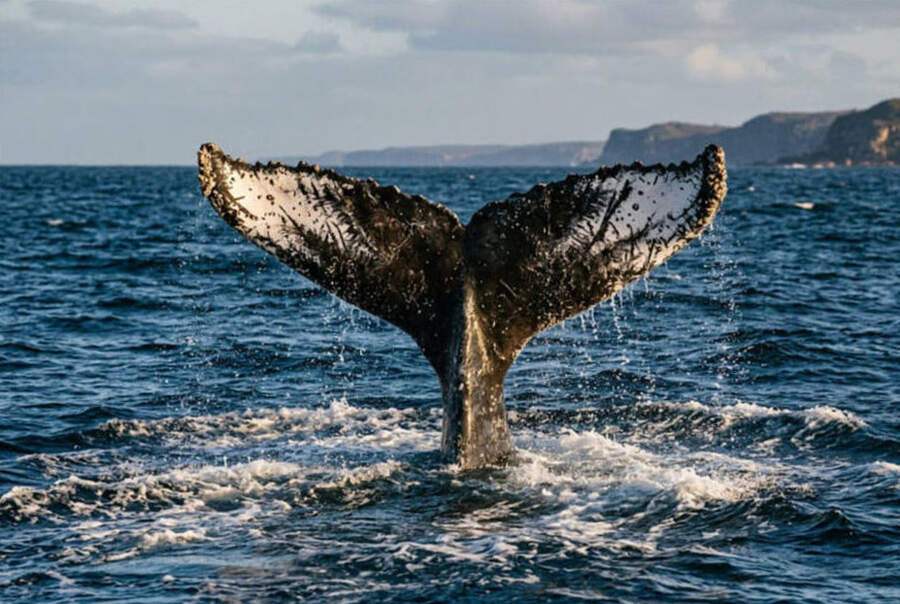
Peak migration windows and planning implications
Northbound migration runs June through September, with peak numbers off Sydney in late July, off the Sunshine Coast in mid-August, and tapering toward Hervey Bay and the Whitsundays through September.
Southbound migration - cows with calves - returns October to November. This is the highest-risk period for vessel interactions because cows actively shield calves from approach.
Recreational boaters can legally observe from the caution zone at slow speed. Swim-with encounters are not permitted in east coast Australian waters for recreational participants.
Three questions about the season
Can I fish near whales? Yes, provided you stay outside the exclusion and caution zones. If a whale approaches your anchored vessel, be ready to move.
Do I need to report whale sightings? You are not legally required to, but ORRCA's sighting app accepts reports year-round and helps track pod locations for other operators.
When are numbers highest near Sydney? Late July through mid-August historically produces the highest daily pod counts from Sydney headlands, coinciding with peak offshore fishing conditions.
Track your departure window at Seabreeze Sydney forecasts .




 Geraldton, WA