

There is no doubt that over long distance, global energy network based on HV DC is the only logical choice.
With HV DC you could wire every single country to one monster grid , trade and sell electricity at will , compensate for time zones and local energy fluctuations.
The same is almost impossible with existing AC mess.
Now from this 500,000 V we need to distribute energy to every single home in the most efficient and elegant manner.
I am looking for complete network, one simple logical organism.
Somehow doesn't seems right to switch back to AC unless there is absolutely no other way around.
Nobody I know tried to build complete network based on DC but that doesn't mean that can not be done.
 Perhaps it would be best to steer this debate back towards solar power, no?
What do you really think happens when you drop 0.7 V across a Si-based diode? I'll give you a hint - multiply that by the current and you have the heat that will be dissipated by this diode in watts. Dissipated heat = loss of efficiency.
Perhaps it would be best to steer this debate back towards solar power, no?
What do you really think happens when you drop 0.7 V across a Si-based diode? I'll give you a hint - multiply that by the current and you have the heat that will be dissipated by this diode in watts. Dissipated heat = loss of efficiency.
Perhaps it would be best to steer this debate back towards solar power, no?
What do you really think happens when you drop 0.7 V across a Si-based diode? I'll give you a hint - multiply that by the current and you have the heat that will be dissipated by this diode in watts. Dissipated heat = loss of efficiency.
Perhaps it would be best to steer this debate back towards solar power, no?
What do you really think happens when you drop 0.7 V across a Si-based diode? I'll give you a hint - multiply that by the current and you have the heat that will be dissipated by this diode in watts. Dissipated heat = loss of efficiency.
I worked on the Greenough River Solar Farm out near Geraldton last year. Largest solar farm in the southern hemisphere.
We just stuck the PV cells in the ground and then all this money magically showed up on these big trucks.

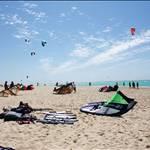
That thing in the middle of the picture is very big and very important, there's 8 of them in Greenough. The Solar panels are the easy part. This thing will be pulled down in 25 years, and obsolete in 2014.
rather than trying to distribute all this energy from a remote area why don't you use the energy right there when the panels are producing. Maybe something like hydrogen production
What do you really think happens when you drop 0.7 V across a Si-based diode? I'll give you a hint - multiply that by the current and you have the heat that will be dissipated by this diode in watts. Dissipated heat = loss of efficiency. That's going to be one hell of a heatsink
We could talk about technical improvements in % forever but in reality from now on the solar technology is mature enough to enter the proper investment market,
With shown above scale I doubt investment in solar farm could be worse then in forest plantation.
To calculate real return on investment we need to find out the real cost of such installation in Australia.
We have to know:
- what is the cost of the deserted land per 1 km2 in suitable location
- cost of additional structure and infarastructure : foundations for sceleton frames, mounting, labor to install 100 kw, fences,
-cost of connecting farm to the grid from their side
-shipping panel from Aussie port to remote location ( we know that shipping from China cost only $1000 per container load)
All we know is cost of solar panels and associated electronics inverters.
That will be at this moment:
100kw system x $1 per Watt = $100,000
output
100 kw x 5kwh per day x $0.06 price of kw x 365 day per year = $10,950
so assuming that there are no other cost but solar panel and electronics return is 11%
We could correct this down by knowing the real cost mentioned above.
We could correct this up by cranking the price from $0.06 to 20c or more ( by selling to locals at better price, using the energy on spot for secondary production ( aluminium smelting ? car battery charging, installing storage onsite and selling only at peak prices etc )
As we could see even at this scale it is not magic investment able to double the money in one year, on another hand still could be realistic and solid investment no worse that many other on Australian Stock Exchange.
www.greenoughsolarfarm.com.au/about-us
Version 2
Imagine that
Instead of pure Solar Farm in remote location investor decide for Hybrid construction.
Now Solar Farm will be located almost in the main city.
In this scenario the same 100 kw is installed as a active roof on industrial warehouse or shopping mall.
Required land:
I assume that we need at least 2 m2 on land to install 100W panel.
100,000 W / 100 * 2 = 2,000 m2 so we need at least 2,000 m2 for a building to install 100 kw system plus next similar size for parking for employee and customers.
In total 5,000 m2 parcel should be sufficient.
Costs:
1) Solar panels 100,000 W x $1 = $100,000
2) Reinforced concrete slab 15 cm for 4,000 m2 at $50 per m2 = $200,000
3) Roofing $20 x 2000 = $40,000
4) Side walls Tilted Slab 6 meters tall = $55,000
so total material cost for structure are close to ~ $500k to have 2,000 m2 warehouse. Double that and estimated total cost come to 1 milion.
Now we could lease or sell space in our Solar Warehouse or shops and sell electricity to tenants below at $0.4 per kw or better.
Income from power generation:
100 x 5 x 0.4 x 365 = $73,000
Income from lease:
2, 000m2 x $120 per meter p.a. = $240,000
Total income: $300,000 p.a
Return on investment :
300,000 / 1,000,000 = 30%
Do you realise your calculation above says $0.40 per Kw? Is that correct for selling to your customers? They are going to have to pay an access fee for the other power suppliers, so is there any advantage going with your power at all? What if it is cloudy?
Are your customers going to use power at your peak periods every day of the year? What if they are only using power weekdays?
Just to add more trouble to your idea, I doubt any authority would only allow you to deliver power at the times that you want for the price that you want. I think it would mess up their power calculations. You seem to want to take the best possible scenario for making money from power and leaving the uneconomic power generation to someone else.
Why not just go do it. You can make a fortune and laugh at us all.
Your calculations for real estate also seem too good to be true. Are there always tenants? Are there any ongoing costs for water and sewerage? Are the tenants happy with just a concrete shell?
With an open clean energy market there would always be some one willing to sell them green energy at slightly cheaper price and bang you got zero return on your energy investment
At this stage output from Green Energy must be somehow assured to be economical.
As for example signing contract with desalination plant to purchase all energy.
In totally unregulated market for example traditional coal base plants could resort to ruin green energy suppliers by undercutting price at daylight to excerpt excessive at dark.
For example by establishing 1 cent daylight tarrife and 50 cents at evenings.
Already the 6 cents offered for solar doesn't seems to be fair if distributor is selling the same at 22 to 44c.
Things definitely could change when people could decide what to do with their energy and instead of selling to the grid will charge battery in their hybrid and electric vehicles then electricity price per unit compete directly against petrol prices.
Per 100 km - 6 liters x 1.5 $ cost of petrol = $9 to drive 100 km
For electric vehicle like:
- Nissan Leaf that use 21 kwh per 100 km
- GM EV1 - use only 11kwh /100 km
$9.00 / 21 kwh = $0.42 or 42 cents kWh per petrol equivalent for Nissan Leaf
9.00 / 11 kwh = $0 .81 or 82 cents for GM EV1
at the lowest rate driving 100 km at 6c could cost you only $1.20 Nissan or $0.66 66 cents !!!!) by GM EV1 which is actually less even that my economical Honda scooter
3 Liters x $1.5 = $4.5 to drive 100 km cost to ride 125 cm3 scooter
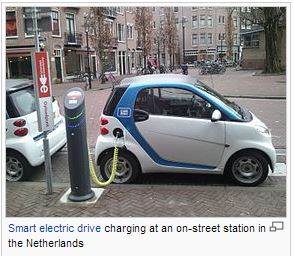
Now we could also calculate that to drive your future EV "for free" you need minimum 2kw to 4kw solar panel system on your roof for your daily trip 100 km.