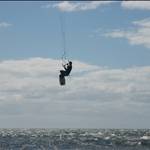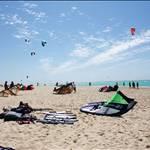


I don't have the time to get the Maths and physics out however I think alot has todo with Humidity. Hot and Humid (think Darwin Cairns Bali) 25kts and I'm on my 12m verses Cold and Dry (Think Perth and most seabreezes) 25kts and I'm flying on my 9m. I don't care what the science says I know that my kite feels a difference
^^^ i agree, i neither know nor care what the reason is but warmer tropical wind has less grunt.
What the...
Seriously What the #@$%
a seabreeze is one of the most consistant winds you can get.
I made all the calculations a couple of years ago. I don't remember the exact details any more, but the difference between a typical winter day (10 deg C, wet, frontal weather) and a typical summer day (30-35 deg C, dry, seabrezee) worked out to be around 5%.
The effect of the cold air in winter is PARTIALLY CANCELLED OUT by lower pressure and higher humidity.
Now regarding tropics like Bali etc. - it is true the wind is considerably weaker, because unlike in the South all the factors reinforce each other ie:
- reasonably high temp (say minus 5% density)
- low pressure (say another minus 5% density or more)
- high humidity (say another minus 2% density)
It seems we are getting somewhere... thanks Al Pacino.
I thought it might be a combination of small factors, humidity/pressure/temp but couldn't think of a quick way to work out what they'd actually have been while I was in Bali
also whatthe's explanation about significant power increases from small gusts probably is part of it too, one thing i would say about the bali wind is it was very consistent, even more so than seabreezes in WA  . One problem i was having in the lighter bali winds was working upwind so slowly, over here i tend to make the most of the gusts trying to shoot upwind as much as possible when they come through, i guess i wouldn't have been able to do that as often or as effectively over there - was a while ago now so i don't really remember this but it sounds about right
Well maths aside. My practical experience between winter and summer is this. My temps are lower than you perth guys. We might see maybe 30 as push. but could be down to 5-10 deg c in winter.
Summer seabreases are definately cleaner smoother more predictable. it makes them easier to ride. the winter frontal wind is definately more variable. an 18 knot day is more likely to be a 16-22 knot day.
i ride the same size kites from summer to winter. i don't ride a bigger size for the same wind speed in summer. But i do notice more power in winter on my biggest size kite. that would be the 15m speed 3. i find i have a couple of knots extra low end in the wind which makes the difference between the walk of shame and staying upwind. at the upper end 30+ knots i can't notice any difference. a storm is a storm winter or summer.
... there is no contest, Darwin is the skinny wind capital of Australia.
I can use my 18/17m kites in upto 30 knots and still have fun, yet in Gerro or a good Perth seabreeze, I'm well lit on my 12m.
Tropics have skinny (read guttless) winds dispite what the anemometer says.
cheers,
Robbie 
^lol I figured you would have a certain knowlage of this subject puetz.
Could skinny winds be caused by non linear wind