
Luderick in Winter: Float, Weed, and Tides

Quick summary
Luderick (blackfish) peak in July and August, feeding hard on green and cabbage weed across NSW and Victorian rock platforms, breakwalls, and estuaries.
A 12 to 16 foot float rod, 3 to 4 kg mono, and a correctly weighted float are all that separate you from a consistent bag.
The how-to
After reading this, you can set up a correct luderick float rig, bait with green or cabbage weed, read a tidal berley trail, and know when and how to strike.
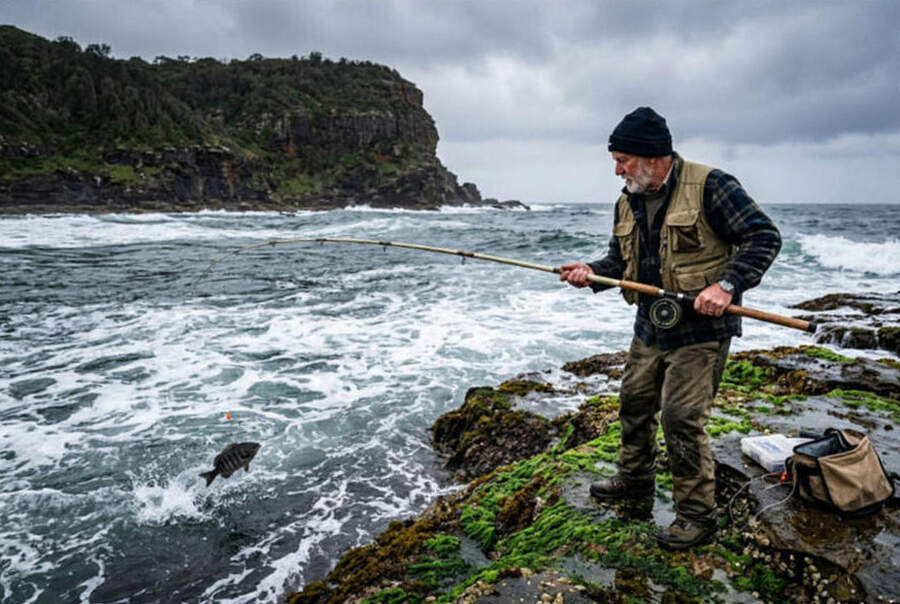
Luderick do not care about the cold.
While most estuary species slow down in winter, blackfish move into shallower water, form denser schools around rock structures, and feed harder on the weed growing thick with cooler water running over it.
Fishing Monthly contributor Jamie Robley, who has fished for luderick along NSW rock platforms for decades, puts it plainly: "Once you've gotten the hang of it, success is very consistent, so failed outings are rare."
July and August are when you get the hang of it fastest.
What you are dealing with
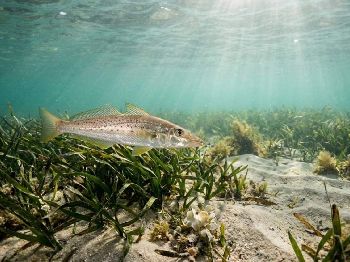
Luderick (Girella tricuspidata) are a laterally compressed, dark grey fish found from southern Queensland through NSW, Victoria, and into South Australia.
They grow to 40 cm with trophy specimens reaching 50 cm or more.
The NSW minimum size is 27 cm with a 10-fish bag limit, per NSW Department of Primary Industries saltwater regulations.
Victoria's minimum is 23 cm with the same 10-fish bag limit, per the Victorian Fisheries Authority.
Luderick are almost exclusively vegetarian.
They graze on marine algae: green weed, cabbage weed, hair weed, and various brown and black sponge weeds growing on rocks, jetties, and submerged structures.
This diet is not a pattern to fight. It is a pattern you can exploit.
Find where the weed grows thickest and there is moving water to wash the algae loose, and you will find the fish feeding underneath it.
Reading a spot before you rig up
A productive luderick location has three things: structure, weed, and tidal movement.
Structure means rocks, jetty pylons, breakwalls, reef edges, and groyne faces.
Weed grows wherever there is structure and enough light: intertidal zones on rock ledges, the shadow sides of jetties, and along breakwall faces are all productive.
Tidal movement is the factor most anglers ignore until they have lost a few sessions to slack water.
The best feeding window is the first two hours of an incoming tide, when clean water washes over the algae growth and dislodges fragments that drift into the current.
Berley your spot before you cast.
Use a mixture of sand and green weed, squeeze it into small balls, and throw them into the current slightly up-tide of where you plan to fish.
The berley trail washes down and aggregates fish below your float position and keeps them there.
"I have found over the years that luderick will eat all kinds of weed. I have trialled from the leafy cabbage and string weed to the various brown and black sponge weed you find across most ledges."
Those are the words of Hayden Webber, a Sydney-based rock angler who has written extensively on luderick technique for Fishing World Australia.
His point matters: the fish are not fussy about weed species.
They are fussy about presentation.
The float rig: what to use and why
Luderick float rigs look simple and hide a chain of small decisions, each of which matters more than the last.
Rod: 12 to 16 feet of lightweight graphite with a soft tip action.
The length lets you lift line off the water and control a drifting float without disturbing the surface directly above the fish.
A centrepin reel or a 2500-3000 sized spin reel loaded with 3 to 4 kg monofilament are both workable; a centrepin gives better float control in a sideways drift.
Float: a slender stick float weighted so it nearly sinks under the total weight of sinker and rig.
The idea is that the float barely breaks the surface: when a luderick takes the bait, the float goes under without the fish feeling resistance.
If your float sits high in the water, add split shot until only 2 to 3 cm of float tip shows.
Hook: a short-shanked #10 for estuaries and timid fish; #8 for rock platforms where fish are more aggressive; #12 to #14 when using cabbage leaf.
Luderick have small mouths. Size matters.
A hook that is too large will miss more bites than you believe possible.
 Baiting with green weed
Collect green weed straight from the rocks near where you are fishing.
It is free, it is fresh, and the fish have been eating it already.
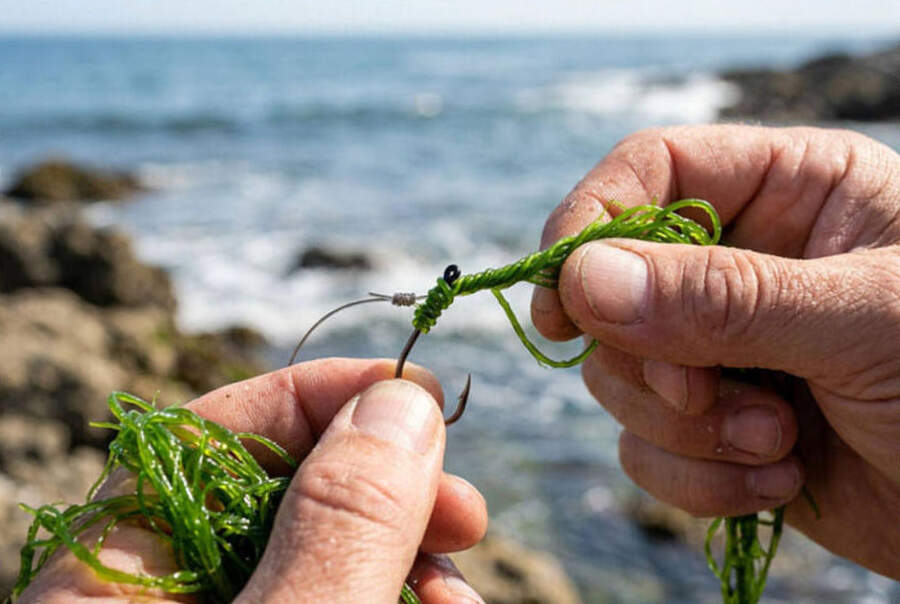
For green string weed: cut or tear a piece 10 cm long.
Start twisting it above the eye of the hook in opposite directions to form a knot above the hook; then squeeze and pinch off the tail about 1 cm below the hook point.
The weed should sit tight on the hook, leaving a small tail trailing.
For cabbage weed: pass the hook point and barb through the leaf once, then use two half-hitches of the leader just above the hook eye to lock the leaf in place.
Cabbage is tougher than green weed and will catch multiple fish on the same piece, which is worth knowing when the bite is on and you do not want to stop baiting.
Bait freshness matters.
Luderick will reject weed that has dried on the hook or gone limp.
Replace the bait every two or three casts if no bite comes.
Depth and the strike
Start with the float set so the bait just clears the bottom.
If you get no interest after five minutes, raise the float stop 30 cm at a time until you find the feeding depth.
In estuaries, luderick often feed mid-water against structure; on rock platforms, they tend to hug close to the bottom of the weed-covered rock face.
When the bite comes, you will see the float dip, move sideways, or lift slightly; it will not plunge under like a bream take.
Wait for the float to go fully under and hold there.
Then strike by sweeping the rod sideways, not vertically.
A sideways sweep sets the hook in the corner of the small mouth rather than straight back through it.
Luderick have soft mouths; a hard vertical strike will tear the hook free or damage the fish if you plan to release.
Once hooked, play them on the soft-tipped rod without applying side-pressure near structure: they will use every rock edge available to fray your leader.
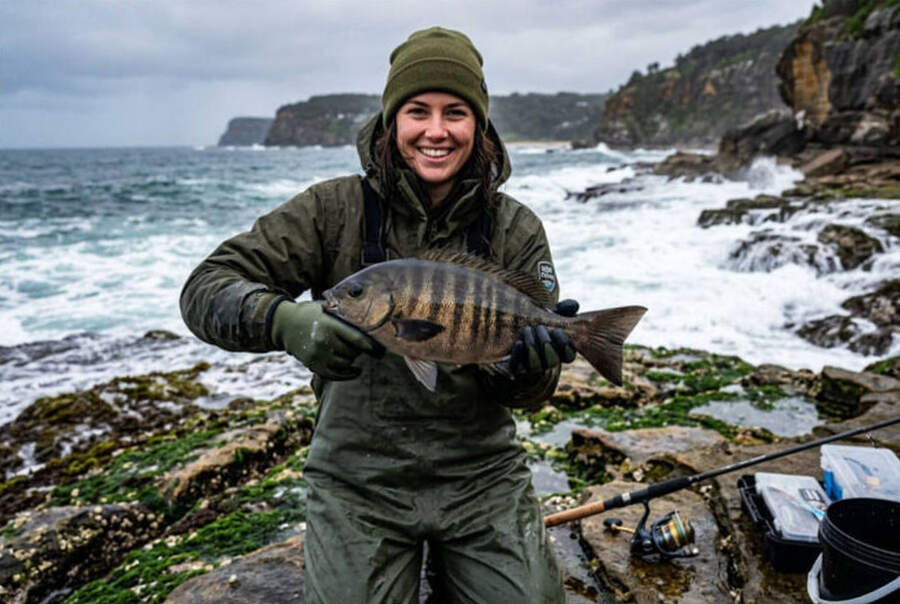 NSW and Victorian locations worth targeting in July
NSW: Long Reef rock platform (Northern Beaches), the breakwall at Coffs Harbour, Merimbula Lake rock edges, and any jetty pylon in Sydney Harbour or Port Stephens where green weed grows in the tidal zone.
Victoria: Port Phillip Bay pier faces, the Barwon River banks near Barwon Heads, and the rocky foreshore sections of the Mornington Peninsula from Rye to Blairgowrie.
Check your Seabreeze tide calendar before you go. Arriving at a luderick spot at the wrong stage of the tide is the most common reason for a blank session.
Questions for your next session
What if the weed on the rocks is different from what the fish are eating mid-water?
Collect weed from the waterline, not from above the high-tide mark: only the submerged growth is what the fish have been actively grazing on.
Can you target luderick on lures?
Rarely: they almost never take artificial presentations, though Hayden Webber's experiments with weed flies (artificial algae patterns) have produced results from ocean rocks where natural weed is harder to collect.
What happens when the current dies?
The bite will usually slow or stop at slack water. Pack up the float rig and come back on the next tide rather than waiting it out.
Is there a size difference between estuary and rock fish?
Rock platform fish tend to average larger in NSW: 32 to 38 cm is typical on ocean ledges, while estuary fish run 27 to 33 cm in most populations.


 Neptune Island, SA