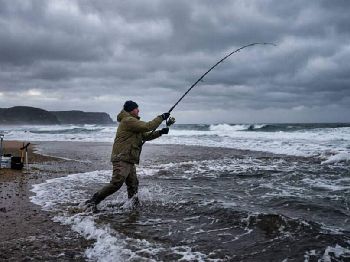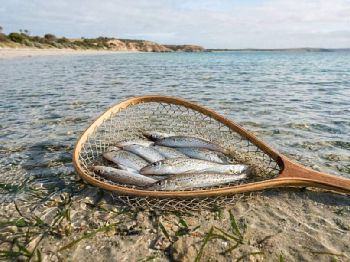

Kingfish on Stickbaits: Surface Tactics

Quick summary
Stickbaiting for yellowtail kingfish is built on three things: a setup the lure can actually swim, structure that holds fish, and a retrieve the fish can't ignore.
NSW rules: minimum 65cm, bag limit 5 per day, possession limit 10. No closed season - kingfish are in play year-round, and right now warmer winter SSTs are keeping them active inshore.
The how-to
After reading this you can rig a stickbait rod correctly, read a reef or current line for kingfish holding water, and work a stickbait to produce strikes.
Yellowtail kingfish do one thing with a stickbait worked correctly - they smash it.
The hit is fast, loud, and leaves no doubt.
Getting to that moment requires the right gear, the right spot, and a lure action that triggers a predatory response rather than curiosity.
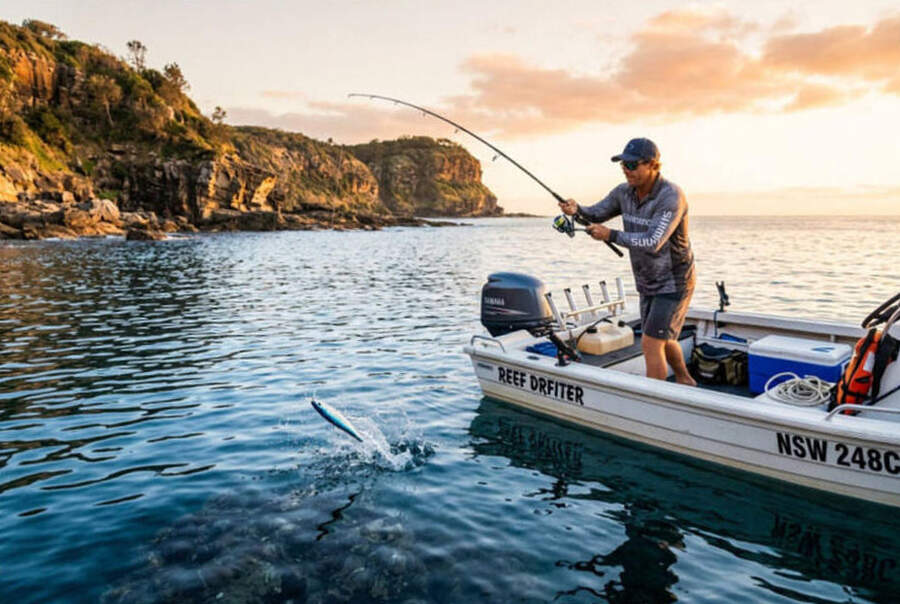
What you need before you start
Entry point: you should be comfortable fishing with lures from a boat, reading a basic sounder, and anchoring or drifting in 10-30 metres of water.
Stickbaiting is not a beginner technique, but it is not complicated once you understand the mechanics.
The rod matters more than most anglers realise. A stickbait rod needs a soft, progressive tip that loads the lure into each walk-the-dog stroke and releases it cleanly.
A rod with too stiff a tip kills the lure action - the bait digs rather than rolls, and kingfish that track it will turn away at the last moment.
A 7-8ft rod rated PE3-5 is the working range for NSW kingfish from 2kg to 20kg.
Pair it with a 4000-6000 class spinning reel loaded with PE3-4 braid and a 60-100lb fluorocarbon or nylon leader of 3-5 metres.
The braid-to-leader connection is critical - use an FG knot or PR bobbin knot that runs smoothly through the guides under load, not an Alberto or Albright that can catch and snap on a hard strike.
"Position your boat upstream of the structure, drift into it, and cast so your lure swims against the current as it crosses the holding zone."
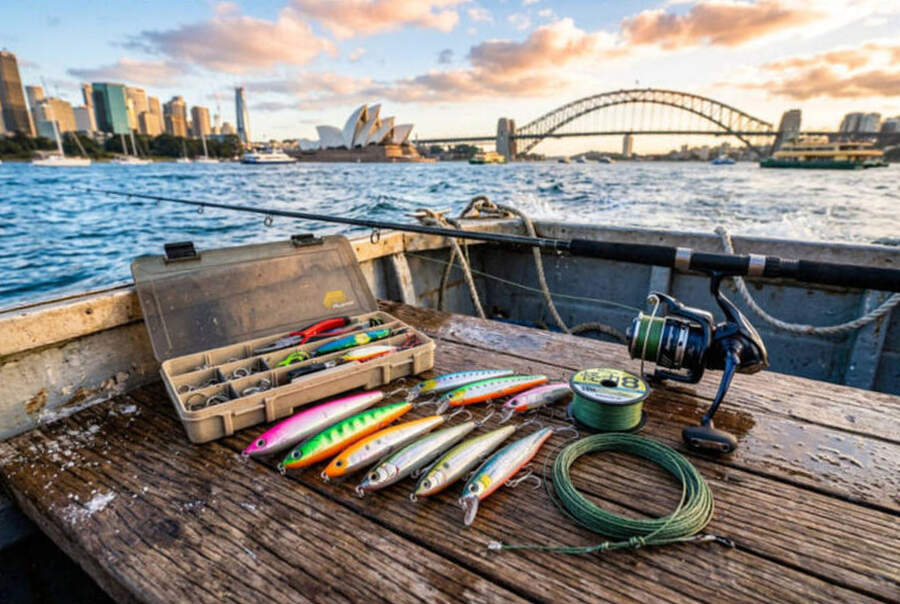
Stickbait size and weight
Match the stickbait to the baitfish profile you find on the sounder.
For NSW kingfish around headlands, reefs, and current lines, a 120-160mm stickbait in the 30-60g range covers most situations.
Heavier is not better - a heavier bait swims faster and rides lower, losing the side-to-side roll that makes the surface presentation work.
Colour is secondary to action, but natural baitfish finishes in white, silver, and blue/green match the dominant forage - pilchards and slimies - along the NSW coast.
Dark topwater lures in red and black can outperform in low-light conditions at dawn.
Reading the water
Kingfish hold on structure that creates current breaks - reefs, headlands, submerged bomboras, and the seam between clean blue water and turbid inshore green water.
On the sounder, look for bait balls holding tight to bottom structure in 15-30 metres.
Where the bait stacks, kingfish stack with it.
Current lines are the non-obvious option that beats working obvious reef marks on a crowded weekend.
A 2-knot current pushing past a headland creates a lee on the downstream side where bait concentrates and predators hold without expending energy.
Work the transition zone between moving and still water - that seam is where strikes happen most consistently.
The retrieve
Walk-the-dog is the foundational stickbait retrieve: rod tip low, alternating downstrokes on a slightly slack line.
Each downstroke loads the tail of the bait, and the slack line on the return lets the head kick to the opposite side.
The result is a side-to-side rolling action that looks like a distressed baitfish struggling on the surface.
Maintain a consistent rhythm - 60-80 rod strokes per minute is a starting point.
When fish are following but not committing, break the rhythm with a two-second pause.
The lure stalls and drifts.
Often that moment of vulnerability is all it takes.
Boat positioning
Position the boat upstream of the structure, drift into it, and cast so the stickbait swims against the current as it crosses the holding zone.
Kingfish feeding in current face into the flow - a lure moving across them at the surface is what they would see if a distressed baitfish swam past.
A lure moving with the current, away from the fish, is far less likely to draw a strike.
Keep the motor off. Kingfish in shallow water over structure are sensitive to vibration - the difference between a drifting approach and a motoring one can be the difference between a full boat and nothing.
Common failures
The stiff-tip rod problem: fish follow, inspect, and peel off. Switch to a softer tip or lighter-rated rod.
The short leader problem: kingfish can see braid near the surface in clear water. Use at least 3 metres of leader, ideally 5.
The too-fast retrieve problem: the lure sprays water and tracks straight rather than rolling. Slow down and let the rod tip do the work.
The wrong position problem: casting parallel to structure means the lure only crosses the holding zone briefly. Cast across or upstream so the lure works through the zone for the full retrieve.
The bad connection problem: a reef kingfish will test your knots hard. A blood knot or basic improved clinch to a 60lb leader will fail at the wrong moment. Check knots before every session.
Regulations and responsible fishing
In NSW, the minimum legal length is 65cm with a daily bag limit of 5 and a possession limit of 10.
There is no closed season.
NSW DPIRD has flagged kingfish as a key recreational species and encourages releasing fish over 100cm - these large individuals are the most productive breeders in the population.
Kingfish have a strong physiology and survive catch and release well when handled correctly: wet hands, minimal air exposure, horizontal hold, and a controlled release with the fish upright and finning before letting go.
Track wind and current direction before choosing a launch spot.
A westerly morning off Sydney's northern beaches needs a different approach than a calm easterly day. Check the Sydney wind forecast before launching and use the NSW tide chart to time your drift.
Questions to take to your next session
What if the fish are deeper than stickbaits reach? When surface action dies, drop to a slow-pitch or butterfly jig over the same structure - kingfish that won't rise to the surface often still respond aggressively to vertical presentations in the 15-40m range.
What if the bite turns on at first light? Carry a 160mm dark-coloured stickbait for pre-dawn sessions. Kings feed aggressively at the surface in low light and a fast, loud presentation can beat the walk-the-dog retrieve in the first 30 minutes after sunrise.
Does lure brand matter? Action matters more than brand.
Buy whatever 120-160mm stickbait you can get to swim correctly with your rod. Test each one at the rod tip in a metre of water at the boat ramp before committing to it on the reef.
What about shore-based stickbaiting? Accessible from ocean rocks and headland ledges during the right tidal flow.
Add 20% to your leader length for rock fishing and use a heavier setup with a 100lb leader for the increased abrasion risk.
Check conditions and never fish alone from exposed ocean rocks.