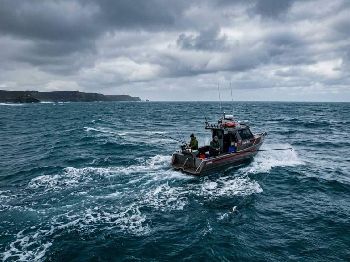

King George Whiting: Bait, Rig, Tides

Quick summary
King George whiting feed over clean sand and seagrass on the incoming tide - match the moon, read the bottom, and you'll find fish most southern Australian winters.
Pipi is the primary bait across SA and VIC, but beach worm outperforms when water is clear and cold.
The how-to
After reading this you'll understand how to read KGW habitat, set up a running sinker rig, berley effectively, and time tidal windows for consistent results.
King George whiting are not a forgiving species. Hook placement, bait freshness, rig weight, and tide timing all matter, and getting even one of those wrong can turn a productive flat into a blank session.
They're also one of Australia's most rewarding saltwater targets - fast fighters on light gear, and arguably the finest eating fish in the southern states.
Where KGW live and why
King George whiting (Sillaginodes punctatus) range from Shark Bay in WA across the Bight to the Gippsland Lakes in VIC, with the richest concentrations in SA's Spencer Gulf, Gulf St Vincent, and across Port Phillip Bay in VIC.
Seagrass is the key structural element. KGW use it for shelter from predators but feed on the sand patches within and adjacent to the meadow - not buried in the weed itself.
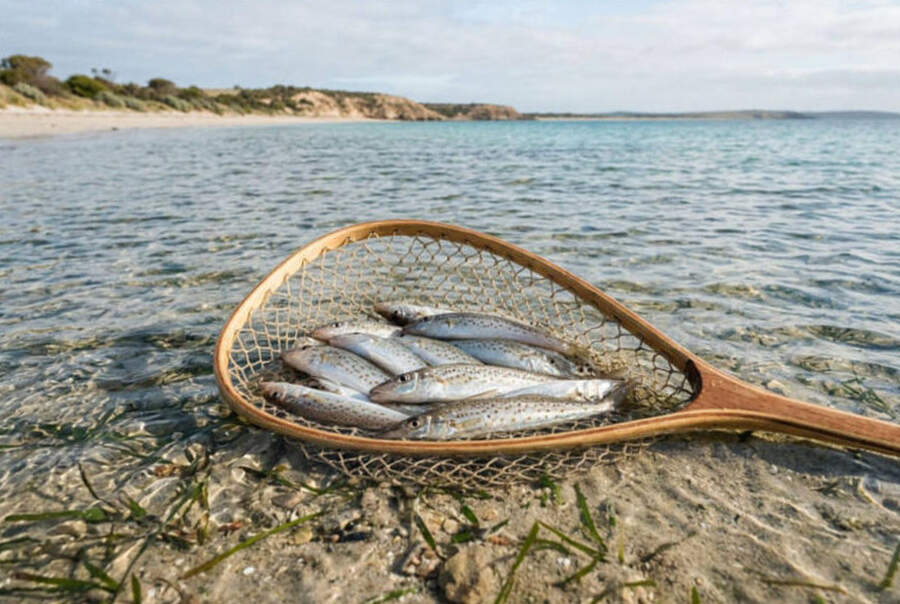
Depth varies with season and location, but 3 to 10 metres covers the majority of productive inshore grounds.
In winter, fish drop to the deeper end of their range, typically 6 to 15 metres, as shallow water temperatures fall below their comfort threshold of around 12 to 14 degrees Celsius.
Alex Ciccozzi, a regular KGW angler and contributor to Fishing World, notes that whiting "love to roam extremely tight to the sea floor where they not only seek shelter from predators but search for food."
"It's not always smooth sailing with various underwater formations of reef, rock, sand and weed generally found in typical whiting zones - but learning to read your sounder will help you distinguish between bottom structure and fish returns."
That tight-to-bottom behaviour explains why rig presentation matters so much - a bait sitting 20cm off the bottom will be passed up by a feeding KGW that's hugging the sand.
Reading the bottom: find sand among the seagrass
The single most useful skill for KGW fishing is learning to identify sand channels running through seagrass beds on a fish finder.
On a standard 200kHz sounder, seagrass returns a softer, fuzzier bottom signal than clean sand - the key is finding the transition zones where seagrass gives way to exposed sand patches, particularly those 2 to 10 metres across.
Ciccozzi recommends using high-CHIRP frequency for KGW work, which gives better target separation at the close-to-bottom ranges these fish occupy.
Drift-fishing across mixed bottom is more effective than anchoring, as it lets you cover different substrate types until you locate active fish.
Bait selection: pipi first, worm second
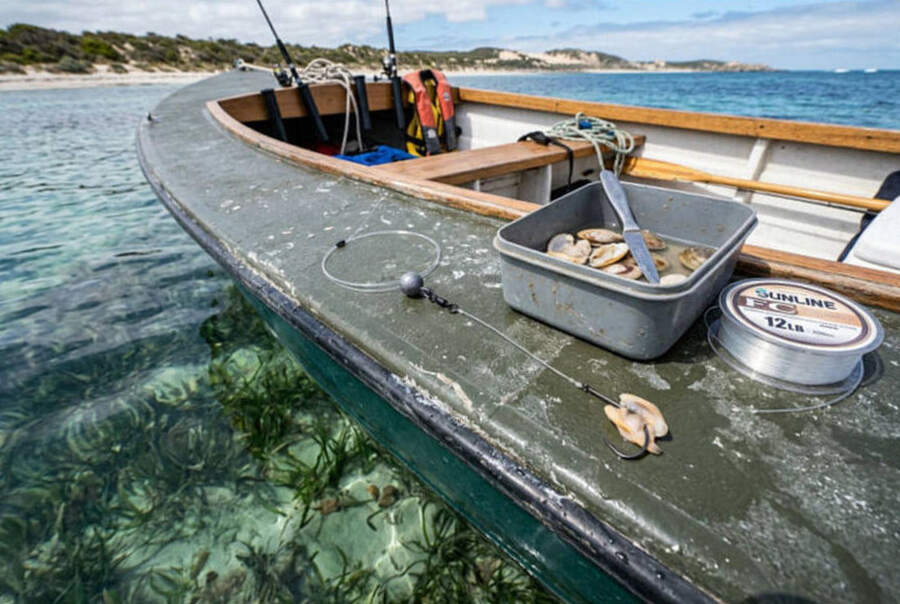
Pipi (Donax deltoides), also called eugarie or cockle depending on where you are, is the default KGW bait across most of its range.
Fresh-cracked pipi is the standard - crack the shell with your thumb, remove the flesh, and thread the hook through the toughest part of the muscle so it stays on through a cast.
Beach worm is the preferred bait when water visibility is above a metre and temperatures are below 14 degrees - conditions that describe most SA and VIC winter sessions.
Squid strip works as a durable third option, particularly when live bait is scarce, but it catches fewer fish than pipi or worm under normal conditions.
Bait freshness matters more for KGW than almost any other inshore species - replace bait every 5 to 8 minutes even if there are no takers, as dead bait loses its scent trail rapidly in cold water.
Rig setup
The running sinker rig is the dominant setup for KGW across SA and VIC.
Thread a small ball sinker - 5 to 15 grams depending on current - onto the mainline, then tie a swivel, and attach a fluorocarbon leader of 4 to 6 pounds breaking strain, 30 to 50cm long.
Hooks should be size 4 to 6 long-shank, which allows you to present pipi or worm without the hook point fouling in the bait - a common issue with short-shank patterns.
Keep sinker weight minimal. KGW respond to a bait that moves naturally with the current and tide; heavy sinkers pin the bait to the bottom and reduce the strike rate significantly.
A paternoster rig (two hooks above the sinker) lets you fish two baits at different heights above the bottom, useful for working out what depth KGW are holding on a given day.
Use 4 to 6 pound fluorocarbon leader rather than mono - in clear, cold water over shallow flats, leader visibility makes a measurable difference to hook-up rate.
Tide timing: the first run is everything
The first two hours of the incoming tide is the most reliable feeding window for KGW across southern Australia.
As the tide floods over the seagrass flats, it pushes baitfish, crabs, and invertebrates off the shallow edges into the adjacent sand channels - and KGW follow the food source into these predictable ambush points.
Moon phase amplifies this: larger tidal ranges during full and new moon periods push more water over the flats, concentrating feed and fish movements.
Slack water is generally unproductive. If the tide isn't running, it's often worth moving to a nearby channel or structure where a small amount of water movement persists.
Early morning incoming tides are the most consistent producers across Gulf St Vincent and Spencer Gulf, particularly from April through August when winter schooling concentrations are at their peak.
Berley: underrated for KGW
Most KGW anglers skip berley, which is a mistake on unfamiliar ground where fish are spread across a large flat.
Minced pipi or crushed, soaked bread mixed with sand makes effective berley - the key is keeping it fine enough to drift with the current rather than sinking immediately.
Drop a small amount every 5 minutes rather than large quantities infrequently - the goal is a continuous scent lane, not a pile of food that pulls fish to the bottom in one spot.
In strong current, use a berley cage or mesh bag hung over the side at mid-depth to control the release rate.
Prime locations: SA and VIC
SA anglers target KGW on the Yorke Peninsula towns (Ardrossan, Port Vincent, Stansbury, Edithburgh), along the Gulf St Vincent shore between Aldinga Beach and Normanville, and in the lower Spencer Gulf near Coobowie and Hardwicke Bay.
Kangaroo Island's north coast, particularly the seagrass meadows around Emu Bay and American River, produces quality KGW through winter but requires a good weather window to access.
VIC anglers focus on the western side of Port Phillip Bay - Portarlington, Queenscliff, and St Leonards are winter KGW hot spots - as well as the inner channels of Western Port around Corinella and Jam Jerrup.
Regulations: check before you go
SA: minimum size is 27cm, with a bag limit of 30 fish per person per day for most SA waters - check the current SA Recreational Fishing Guide at pir.sa.gov.au for zone-specific variations.
VIC: minimum size is 27cm, with a daily bag of 20 fish per person - details at vfa.vic.gov.au.
WA: minimum 28cm with a daily bag of 12 fish per person in most zones.
Regulations change - confirm current limits with the relevant state fisheries authority before your session, particularly if fishing close to zone boundaries.
For your next session
Focus on one ground you know holds fish and spend time learning the sand-to-seagrass transitions in detail.
Plan your launch around an early morning incoming tide that coincides with a full or new moon, have fresh pipi and beach worm ready, and set up a light running sinker rig with 5lb fluorocarbon leader.
Track current conditions for Gulf St Vincent and Spencer Gulf at Seabreeze Gulf St Vincent wind forecast to time your session around calmer windows this week.
Questions
Can I use soft plastics for KGW? Yes, but results are inconsistent. Small paddle-tail plastics (50-60mm) on a 1/8oz jig head work in clear, calm water, but natural bait outperforms plastics in winter conditions by a significant margin.
What rod and reel setup is ideal? A 7 to 8 foot light spin rod rated to 4-8lb, matched with a 2500-size reel and 6lb braid, gives enough sensitivity to feel light bites on clean sand bottoms.
Do KGW school with other species? They often mix with yellowfin whiting in the shallower parts of their range. Sand whiting are a warmer water species, so in July they're largely absent from KGW grounds.
What's the best time of year? May through August produces the most consistent KGW fishing across SA and VIC, as cold water concentrates schools over predictable sandy patches rather than dispersing them across the full seagrass zone.


 Double Is Pt, QLD