
Wave SUP: Surfing Breaks on a Paddleboard

Stand up paddleboarding on flat water is one thing. Taking that same board into the surf is a genuinely different skill set - more dynamic, more physical, and far more rewarding.
SUP surfing is one of the fastest-growing disciplines in the paddle world, and the good news is that if you can already flat-water paddle, you have a real head start.
Your balance is dialled in, your paddle stroke is consistent, and you understand your board's weight distribution. What you need now is a framework for translating those skills into the moving, unpredictable world of ocean waves.
This guide draws on the International Surfing Association (ISA) SUP surf instructor curriculum and the published coaching advice of two-time Ultimate Waterman champion Zane Schweitzer to give you the clearest possible path from first wave to confident surfer.
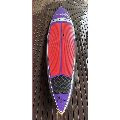
Your flat-water board is almost certainly the wrong tool for surf. The same length and volume that makes it stable on a calm lake makes it unwieldy in breaking waves.
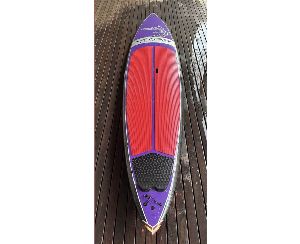
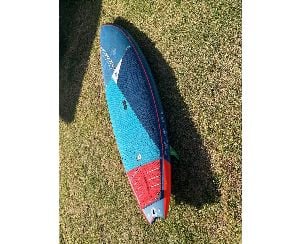
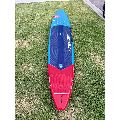
For SUP surfing beginners, aim for a dedicated surf SUP in the 8'6" to 9'6" range, with a width of 29 to 31 inches.
Volume should be generous - as a starting point, target roughly 100 to 120 litres for a rider weighing around 80 kg. This keeps you buoyant enough to catch waves early without sacrificing the manoeuvrability you need to angle and turn.
- Fin setup: A 2+1 thruster - a larger centre fin with two smaller side fins - is the ideal starting configuration. The centre fin gives tracking and drive off the bottom, while the side fins allow you to pivot and carve. A single fin alone can feel skatey and hard to control on steeper wave faces.
- Paddle length: Drop 6 to 8 inches from your flat-water paddle length when surfing. A shorter paddle lets you make faster, tighter strokes on the wave face without burying the blade behind you mid-turn.
- Leash: Use a straight (non-coiled) ankle leash the same length as your board. A coiled leash can recoil the board back toward your head in a wipeout. Attach it to the ankle closest to the tail of the board.
Positioning Yourself in the Lineup
Where you sit in the water matters enormously, and this is where SUP surfers either earn respect or lose it fast. Because you are standing, you can see incoming swells much earlier than prone surfers - giving you an unfair positional advantage. Use it responsibly.
Paddle to the shoulder or edge of the main peak rather than sitting directly at the take-off spot.
Before paddling out, read the break from the beach: note where waves consistently pitch, which direction they break, and whether there is a channel (calmer, deeper water) you can use to paddle out without fighting directly through the break zone.
When waiting for a wave, stand in a staggered hybrid stance with your toes angled slightly toward the nose - not fully side-on as you would be when riding.
This lets you transition quickly into a surf stance without shuffling feet at the critical moment of catch. Keep your paddle blade lightly in the water on your toe side as a low brace for stability while you wait.
Catching the Wave
This is the step most beginners get wrong, and understanding it is the single biggest accelerator of progress. According to Zane Schweitzer's published coaching notes, the key is using short, high-cadence "chopped" strokes rather than the long, sweeping flat-water stroke.
You need rapid acceleration to match the wave's speed - a long stroke on a small wave will see the lip pass under you before you have built enough momentum.
- Spot your wave early. Turn your board to face the beach while the wave is still 10 to 15 metres behind you.
- Begin paddling immediately with short, quick, powerful strokes - bend the front knee, drop the hips, and drive the blade deep with each stroke.
- As the wave lifts the tail of your board, lean forward to keep the nose from popping up. This is the most counter-intuitive step: when the back of the board rises, your instinct is to lean back. Resist it completely.
- Once you feel the wave carrying the board forward, take one or two more confirming strokes, then step back and pivot into your full surf stance.
The ISA SUP surf curriculum identifies failing to lean forward at the moment of catch as the number-one reason beginners pearl (nose-dive) or stall out before getting to their feet. Lean into the wave, not away from it.
Riding and Turning
Once you are on the wave, your goal is to stay in the pocket - the curved section just ahead of where the lip is pitching and breaking. This is where the wave is most powerful and where your speed comes from.
Riding straight to the beach is what happens when you let the wave take you wherever it wants. Instead, angle the board toward the open, unbroken face immediately after take-off.
Your paddle is not just a steering tool - it is a dynamic outrigger and power source throughout the ride.
On a bottom turn, plant the blade wide on the toe side and sweep it back toward the tail to generate drive and help pivot the board up the face.
On a top turn, a quick push stroke on the inside of the turn compresses the rail and snaps the tail around. Keep the paddle in the water as much as possible; lifting it entirely kills both momentum and balance.
- Bottom turn: As you drop down the face, bend your knees, shift weight to the heel-side rail, and brace the paddle on the toe side to aid the turn up the face.
- Trimming for speed: Small forward and backward weight shifts - just a few centimetres - control your speed on the wave. Shift slightly forward to accelerate toward the shoulder; shift back to stall in the pocket and let the wave catch up.
- Kick turn: Step all the way back to the tail to lift the nose, then use a wide cross-bow or sweep stroke to redirect the board. This is essential for redirecting on a closeout section or cleaning up at the end of a ride.
SUP Surf Etiquette
SUP surfers are frequently resented in lineups because they can catch waves earlier and from further outside than prone surfers, effectively claiming every set wave before it reaches the peak.
The ISA's SUP surf instructor certification course dedicates an entire module to etiquette precisely because the sport's technical advantages create real social friction if misused. These rules are not optional.
- Yield the peak to the closest surfer. The person deepest - closest to the breaking lip - has right of way on every wave. On a SUP you can often out-position everyone in the lineup, so consciously choose not to.
- Surf the shoulder, not the peak. In a mixed lineup, let prone surfers and longboarders take set waves from the peak. Take the waves that are a little further down the line, or catch them slightly inside where competition is lower.
- One wave, then paddle wide. After riding a wave, paddle back out through the channel - never straight back through the lineup where you will cut across other surfers' paths.
- Do not wave-hog. Just because you can catch every outside set wave does not mean you should. Letting prime waves pass earns far more goodwill than snapping every peak.
- Start at beginner breaks. Quiet beach breaks with small, slow-rolling 1 to 2 foot waves are the right environment to learn. Crowded reefs and busy point breaks are not.
Common Mistakes to Avoid
- Leaning back on take-off. The most common cause of stalling and pearling. Commit your weight forward as the wave lifts the tail.
- Using long flat-water strokes to sprint into waves. Switch to short, fast, powerful chopped strokes when accelerating for a wave - your touring stroke does not generate speed quickly enough.
- Standing square on the board. Both feet parallel to the rails gives you no turning leverage. Use a staggered surf stance with feet hip-to-shoulder-width apart across the board's width.
- Lifting the paddle clear of the water mid-wave. Your paddle is your balance bar on a moving wave. Keep it low and engaged even when you are not actively stroking.
- Skipping beginner breaks. The learning curve for SUP surfing is steep and real. Choosing the wrong environment - crowded, powerful surf - creates danger for you and everyone around you.
Start Small, Build Confidence
The riders who progress fastest in SUP surfing are not the most physically gifted - they are the ones who start on genuinely small, forgiving waves, repeat the fundamentals until they are automatic, and treat every person in the lineup with consistent respect.
The ISA recommends logging at least 20 documented practical hours in surf conditions before progressing to steeper or more crowded breaks, and that benchmark exists for good reason.
Take your time, stay humble in the water, and the wave-riding ability you build will serve you for a lifetime.



 TULLAMARINE, VIC