
July Offshore: Warm Seas, Weekend Window

In short
Sea surface temperatures off NSW and eastern Tasmania are running 3 to 4°C above average for mid-July, keeping pelagic species in reach of the continental shelf.
Cold fronts sweep through mid-week, then a new Bight high drifts toward Tasmania and opens a cleaner southerly window for the weekend.
What to watch
The Bight high's pace matters: a slow drift keeps the southerly window open into Sunday, a fast one compresses it to Saturday only.
July 2026 is shaping as the most fishable mid-winter in years.
Sea surface temperatures off NSW and eastern Tasmania are sitting 3 to 4°C above their long-term averages, from Bureau of Meteorology SST analysis for the week ending 21 June 2026.
That surplus warmth is holding pelagic species including kingfish, yellowfin, and surface-feeding tuna inside the continental shelf break longer than a typical July allows.
The driver is an El Niño that has passed well beyond threshold.
The latest Niño3.4 index reading, for the week ending 28 June 2026, sat at +1.24°C, almost 0.5°C clear of the El Niño boundary, and is still warming, up 0.3°C over the preceding fortnight, according to the Bureau.
Forecasts point toward a strong to very strong event, with around half the Bureau's coupled climate models placing this El Niño among the highest on record since 1950.
The Bureau's winter outlook gives a 60 to over 80 per cent chance of above-average maximum temperatures across most of south-east Australia through July to September, a pattern that keeps the ocean warmer and the offshore bait schools active later into winter than usual.
"Temperatures this winter are likely to be above average across most of Australia. This follows a warmer than average autumn," the Bureau of Meteorology stated in its long-range forecast for winter 2026.
The synoptic setup this week
The first week of July brings a two-act weather pattern for east coast operators.
Act one is rough.
A ridge from a 1036 hPa high near New Zealand is retreating, and a series of cold fronts will cross NSW mid to late week, according to the Bureau's coastal marine forecast issued 1 July 2026.
The Sydney coast is under a Strong Wind Warning for Wednesday, with northerly winds of 15 to 20 knots strengthening to 30 knots offshore by evening.
Winds will turn west to south-westerly on Friday as the fronts clear, then swing southerly over the weekend as the new Bight high drifts toward Tasmania.
Act two is the window.
The southerly that follows a Bight high is typically light and clean: 10 to 15 knots with a short-period residual swell flattening out by Saturday afternoon.
It is the kind of morning that fills the car park at Crowdy Head, Port Hacking, and Bermagui before daylight.
 What the warm water means offshore
Yellowtail kingfish school heavily in offshore waters beyond the continental shelf through May to August, per NSW DPI species data.
In a normal winter, the 100 to 200 m line, roughly 15 to 25 nautical miles from the NSW coast, is the productive zone.
With SSTs sitting 3 to 4°C above average, bait schools that normally push out to the shelf break are holding in shallower water, compressing the distance you need to run.
Browns Mountain, 35 nm north-east of Sydney, typically holds structure-loving kingfish from June onward.
This season, snapper and kingfish have been reported working inside the 80 m mark at Montague Island and the Twelve Mile reef off Bermagui, shallower than most skippers expect in July.
For those targeting the shelf break itself, the warm Tasman water is maintaining a cleaner temperature gradient than usual: a sharper break between warm and cold water concentrates bait and holds surface-feeding species near the thermocline.
Diving: visibility benefit from the settled water
The El Niño dry pattern, with below-average rainfall across eastern NSW through June, has kept river discharge minimal.
That means cleaner, clearer inshore water than a wet La Niña winter would produce.
Offshore reefs off Jervis Bay, the Solitary Islands, and the Swansea channel rocks are carrying unusually clear visibility for July, with some dive operators reporting 15 m-plus horizontal range through late June.
The Tasman Sea's above-average temperatures are also meaning wetsuits in the 5 mm range, rather than the 7 mm suits that a cold July normally demands, hold comfort through a two-tank dive.
Sailors: the weekend departure window
For passage-makers running the NSW coast, the pattern is classic winter logic: sit out the mid-week norther, leave Saturday morning on the southerly.
The Bight high will give a true southerly at the New South Wales coast by Saturday, ideal for northward passages running up the coast from Sydney to the Hunter or Forster.
For south-bound passages from Port Stephens toward Sydney, the southerly is a headwind on deck but a favourable sea state: short, fading swell from the south at 1 to 1.5 m by Sunday, fading swell from the south at 1 to 1.5 m by Sunday.
Timing the bar at Swansea, Lake Macquarie's entrance, and the entrance at Merimbula requires checking conditions locally: the southerly builds sea quickly in exposed sections.
Looking ahead: July conditions overall
The Bureau's long-range guidance gives little sign of the warm SST pattern breaking before spring.
For the rest of July, expect the familiar winter rotation: Bight highs moving east, cold fronts behind them, southerly windows after each one.
The non-obvious advantage this year is that the warm ocean is not just a passive backdrop: it is actively holding bait in shallower water, meaning productive fishing within 20 nm of the coast in conditions that in a cooler year would push you 35 nm offshore.
Plan your July sessions around the windows rather than the fronts, and this could be a memorable month on the water.
Track the developing forecast and check local warnings via the Seabreeze NSW marine warnings page .
Questions
Why is the water so warm off NSW in July 2026?
The El Niño in the tropical Pacific is suppressing the normal easterly trade winds, allowing warm water to accumulate in the Tasman Sea and along the NSW shelf.
Will the warm SSTs bring tropical species further south?
Warmer water in July can bring mahi-mahi and small marlin further south than typical, but there is no confirmed observation of this yet this season; kingfish and yellowfin remain the primary offshore target.
Is the window safe for smaller vessels under 5 m?
Not for offshore runs to the shelf break: the residual swell after the fronts will still be 1.5 m or more at the 50 m line on Saturday morning. Inshore reef and estuary options near headland shelter are a better call until Sunday.
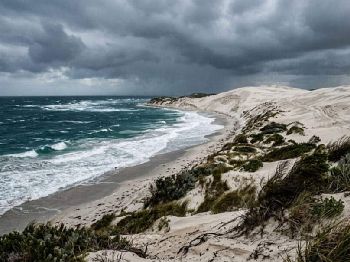


 Turners Beach, TAS